Tag Archives: real food

Even Though the Challenge is Over …

Posted on

… I am still cooking locally produced foods.

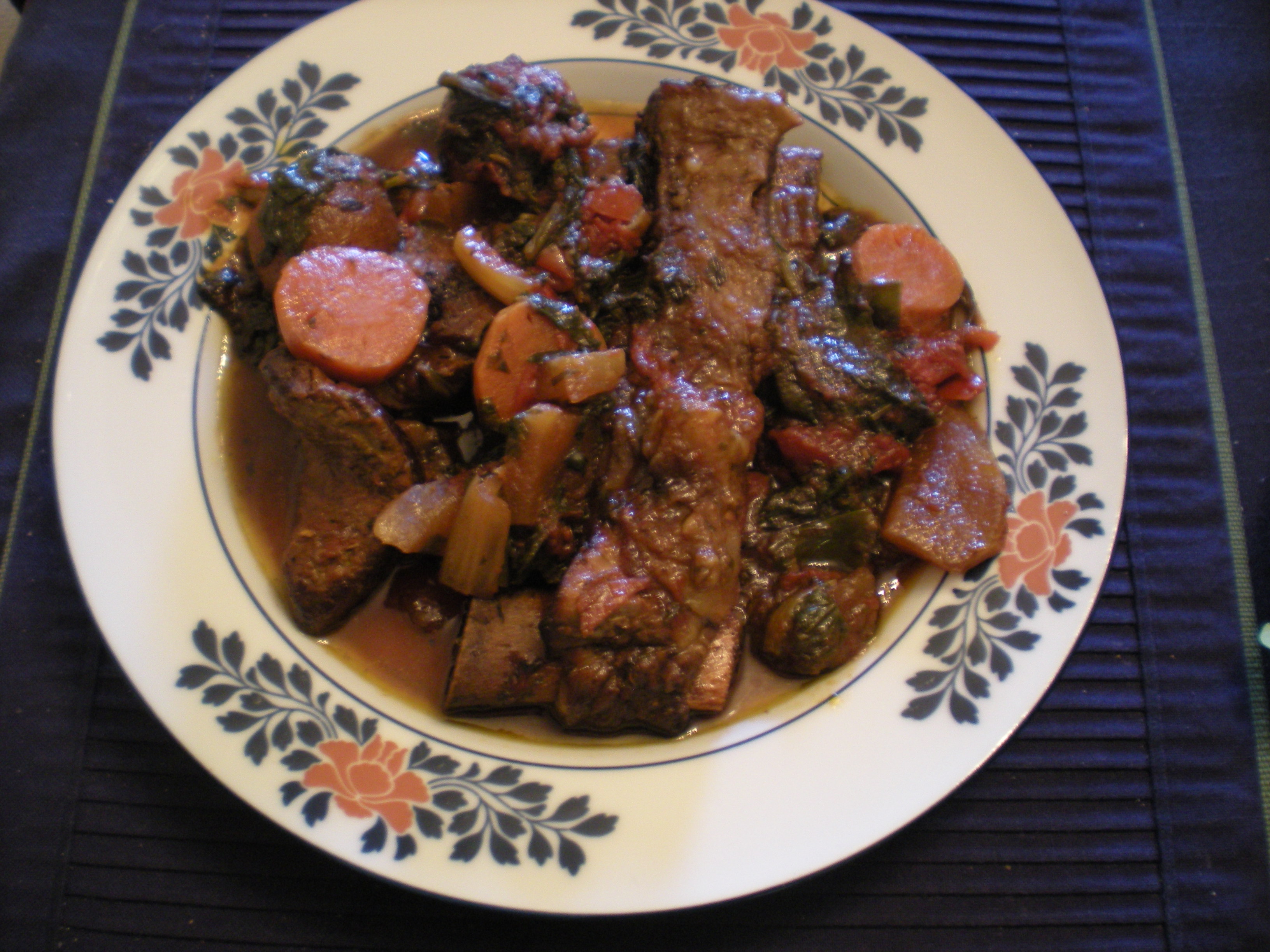
Today was one of those crock pot days. At the market yesterday, I picked up those beautiful short ribs from the Amish farm. Plus, chard to go along with my CSA mustard greens.
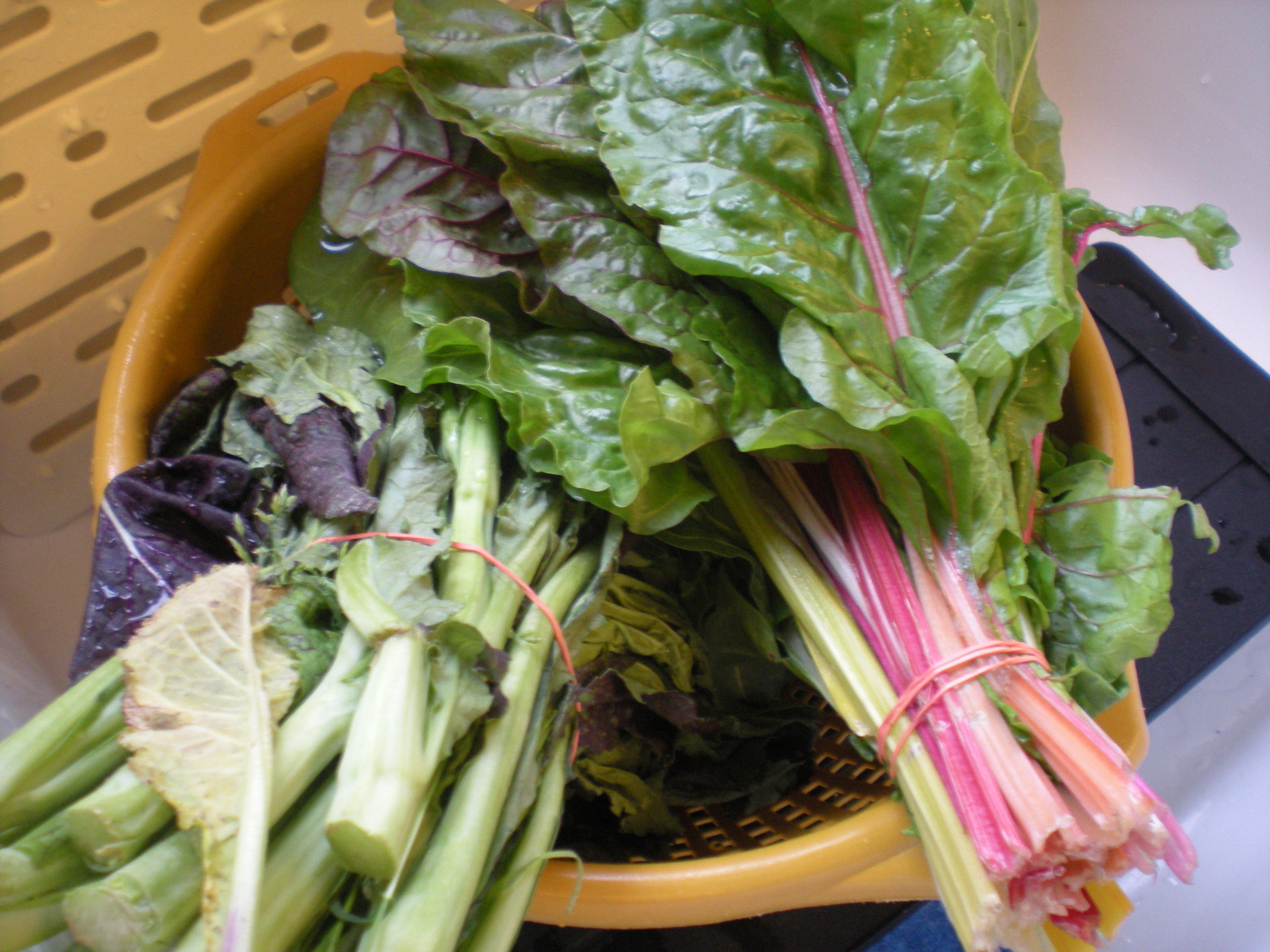
Add to that some stuff from the fridge and pantry.

I made a sauce using the organic fire roasted tomatoes, some tomato paste, and added tomato preserves, harissa and some honey. Added fresh herbs from the garden and garlic and spring onions. Used a turnip and a couple of carrots from the CSA, and put it all in the pot but the meat. The meat I browned first, before adding it to the top of the crock pot. Seasoned it with ground ginger and cinnamon, too. Smelled like Morocco in here.

I have been using the crock pot liners since I can’t lift and wash the insert. I know I could get my husband to clean it but it’s just easier to do it this way. They are an interesting invention, as I am amazed at how strong they are. I think more people would use crock pots if they used this easy clean up time saver.

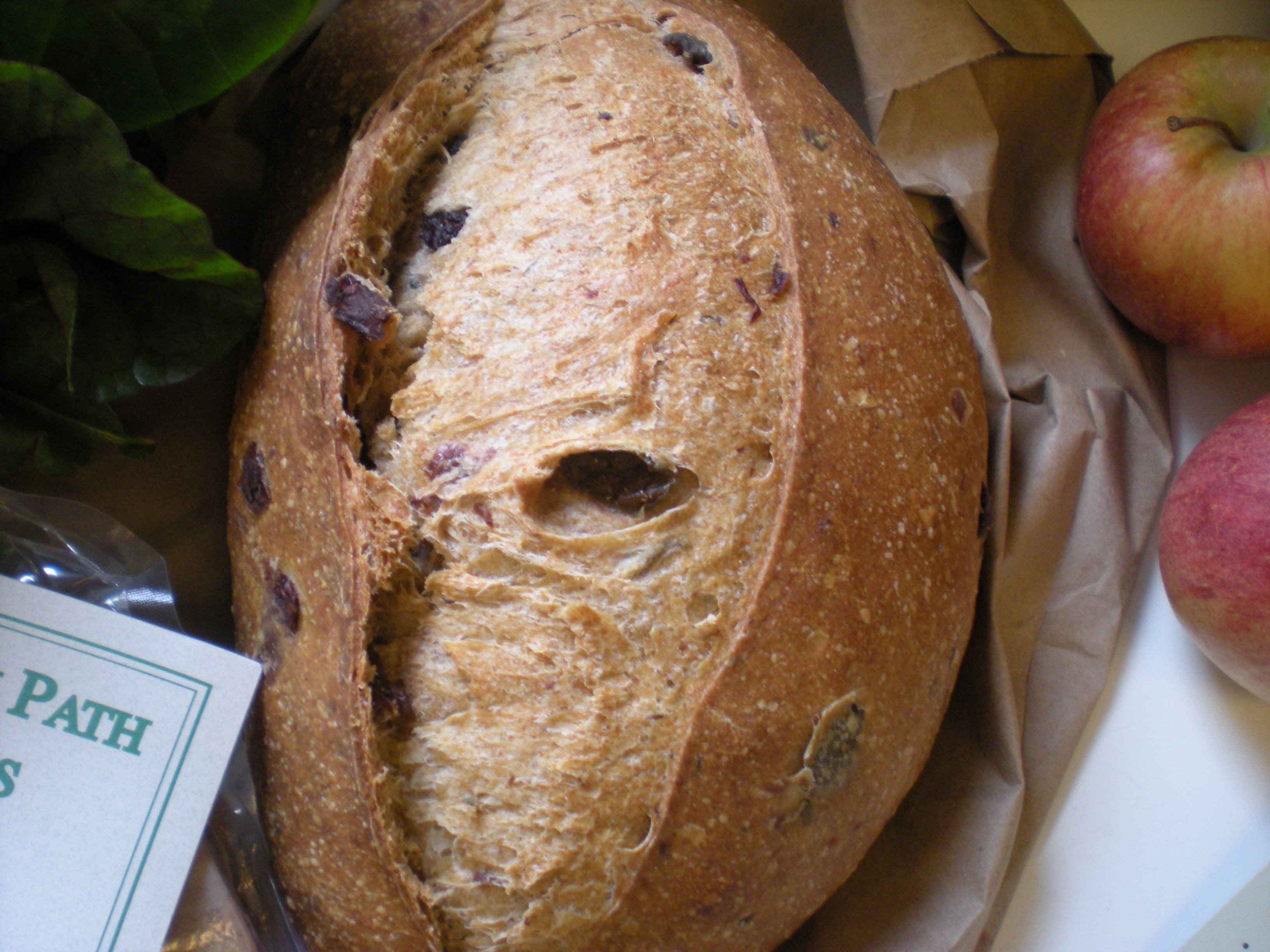
After setting up the crock pot, I made a local breakfast for us. The last two pieces of chicken fried steak that I made the other night from the cube steak I bought at Wagner’s. Two eggs from the CSA. Atwater’s rosemary bread, toasted with fresh butter. Yum, steak and eggs for breakfast.

Back to dinner, after spending time cleaning out the pots outside so I can plant some chard and arugula, and messing around on the internet, I came down the cellar to look for wine. I needed a big wine to stand up to the beef with all those intense tomatoey, spicy notes. Ended up digging around and found a 2000 Linden Red, not one of the individual vineyard designations, but a blend of grapes from the three sites. 63% Cabernet, with more than 30% franc and the rest petit verdot. This was a big wine. It just goes to show that if you have the talent and the patience, you can make great wines in less than stellar growing years. This wine had gobs of fruit. Still dark, dense and chewy. I bet we paid around $20 for that wine, and it would stand up to a Cabernet from California that costs at least twice the money.
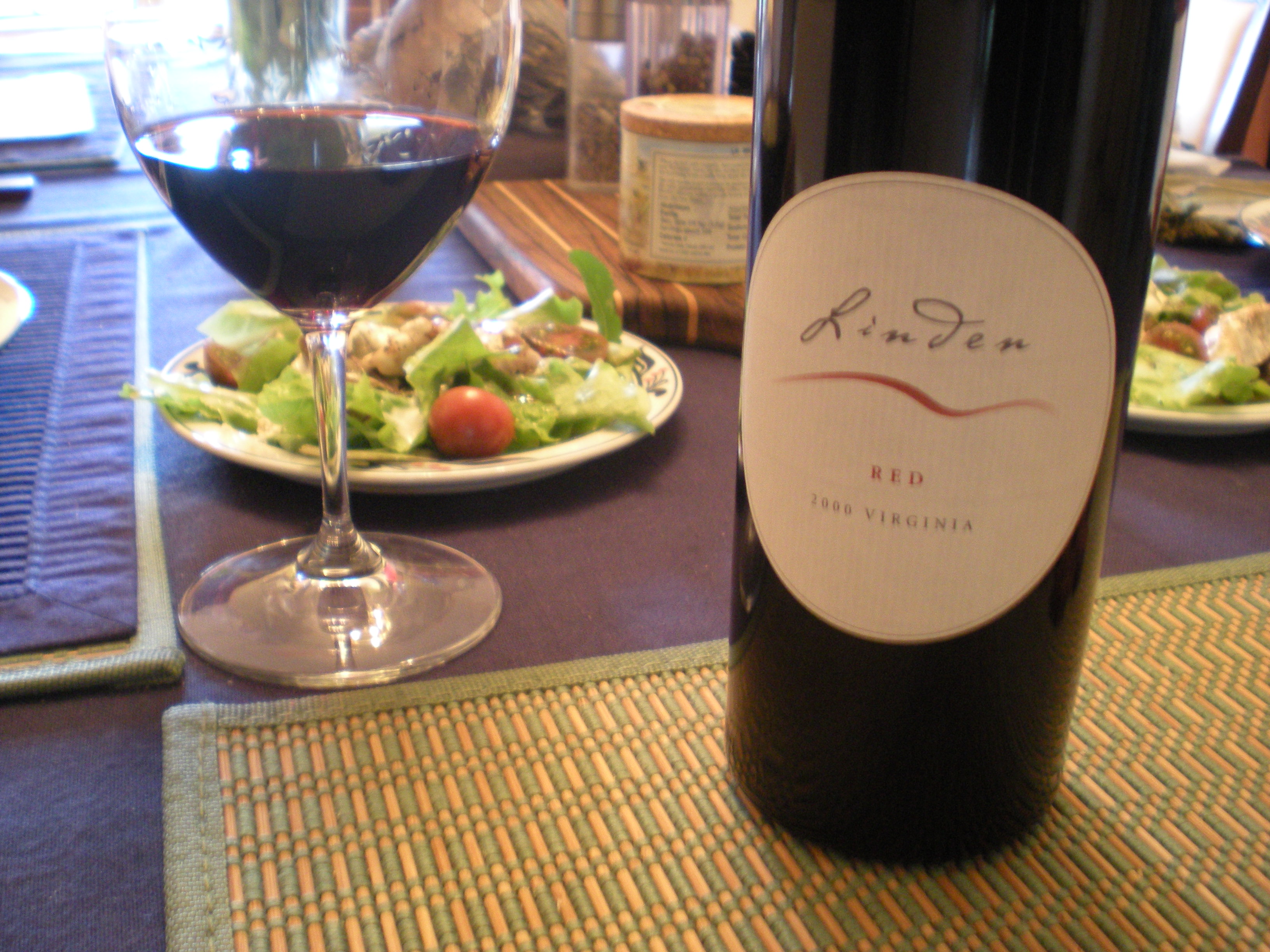
Dinner was equally impressive, even if it looked a little messy.
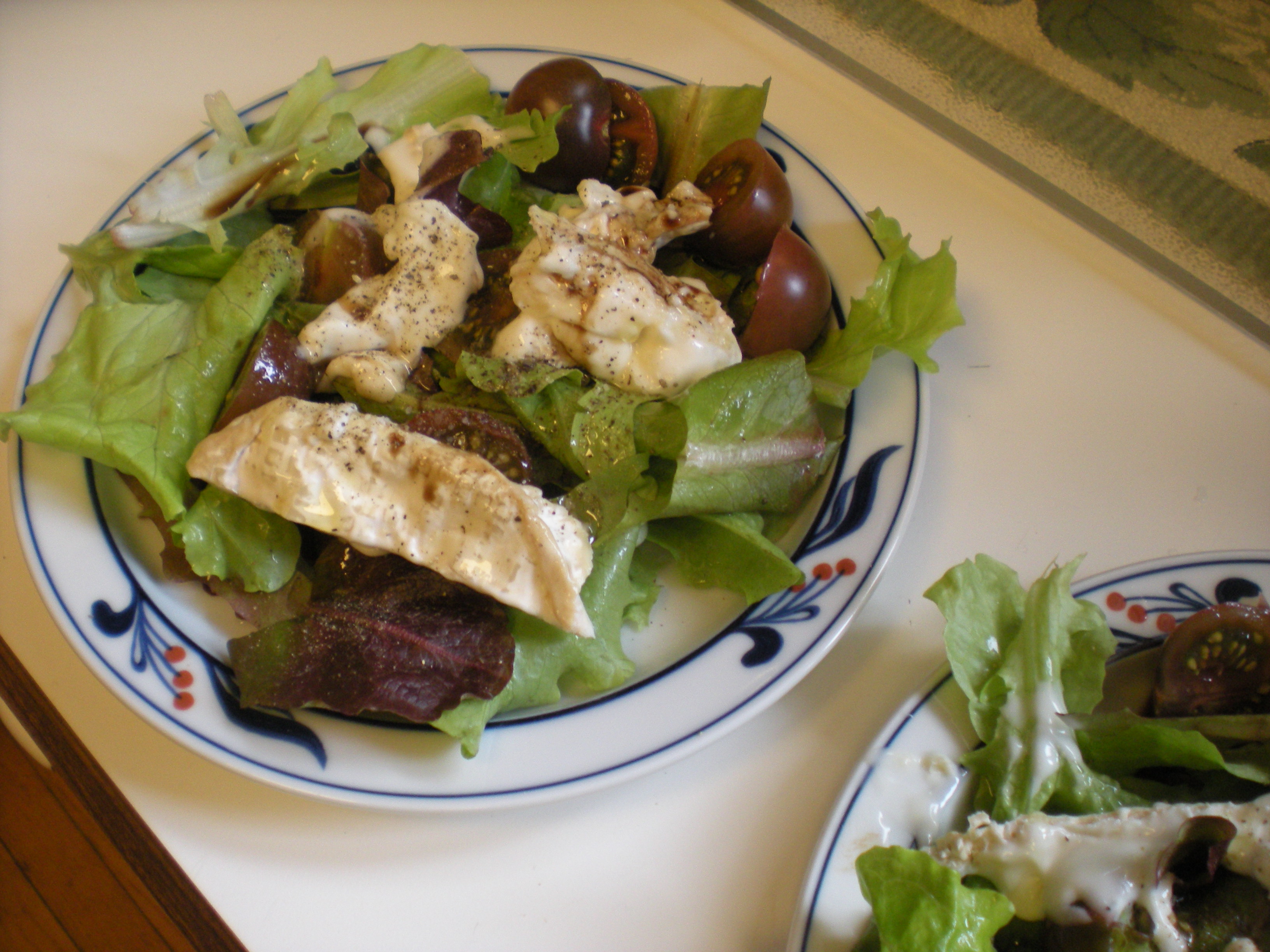
The salad was nice, too. We used some of the Cherry Glen goat cheese, the Monocacy Gold, with CSA greens, plus arugula and tomatoes from Mock’s Greenhouse.
I am finding it very easy to make good meals using local items and no processed foods. Check this one off as something I will make many times.

Feeding My Farmer’s Market Addiction in Silver Spring

Posted on

It’s been two months since I set foot in a farmer’s market. I think I was having withdrawal symptoms, so I coerced persuaded my better half to drive me down to Silver Spring this morning. I can drive now, but can’t carry. I suppose that if I went by myself I might buy less, but there’s no fun in that.

I decided to issue myself a personal challenge. That is, not to set foot in Giant, Safeway, Food Lion or Weis for the next six months unless I absolutely have to. There are just a few things not available elsewhere that I buy in the grocery store.

My goal is to use CSA, farmers’ markets, Boarman’s, local veggie stands, small businesses, family owned businesses (have to say this to sneak in Wegman’s), pick your own farms, and everything else I can think of that will provide me mostly real food instead of processed.

I will keep track of what I do and use the blog to discuss how well I am doing in really changing my diet to eliminate more and more of the processed foods. Today was the beginning of stocking up on fresh foods, and clearing out the pantry and fridge of the processed stuff.

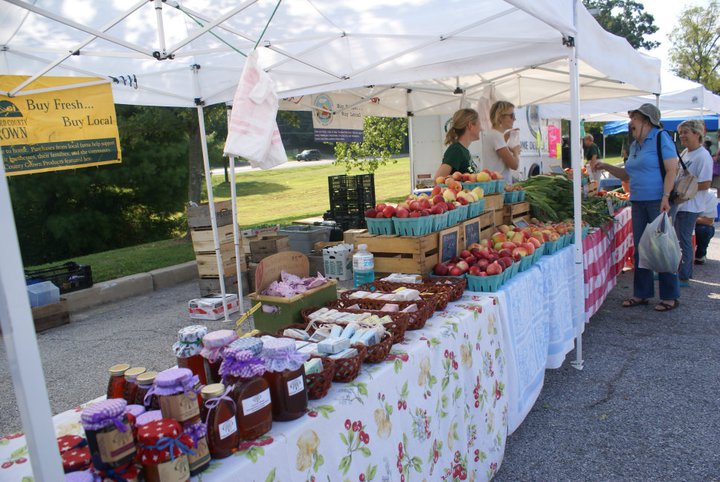
We arrived around 11 am and the first thing you see is the Atwater’s truck.

I had to pick up a loaf of kalamata olive bread to serve with the last chicken noodle soup out of the freezer tonight. We had demolished the two loaves we bought last week in Catonsville, partially by taking some to friends for dinner last night.

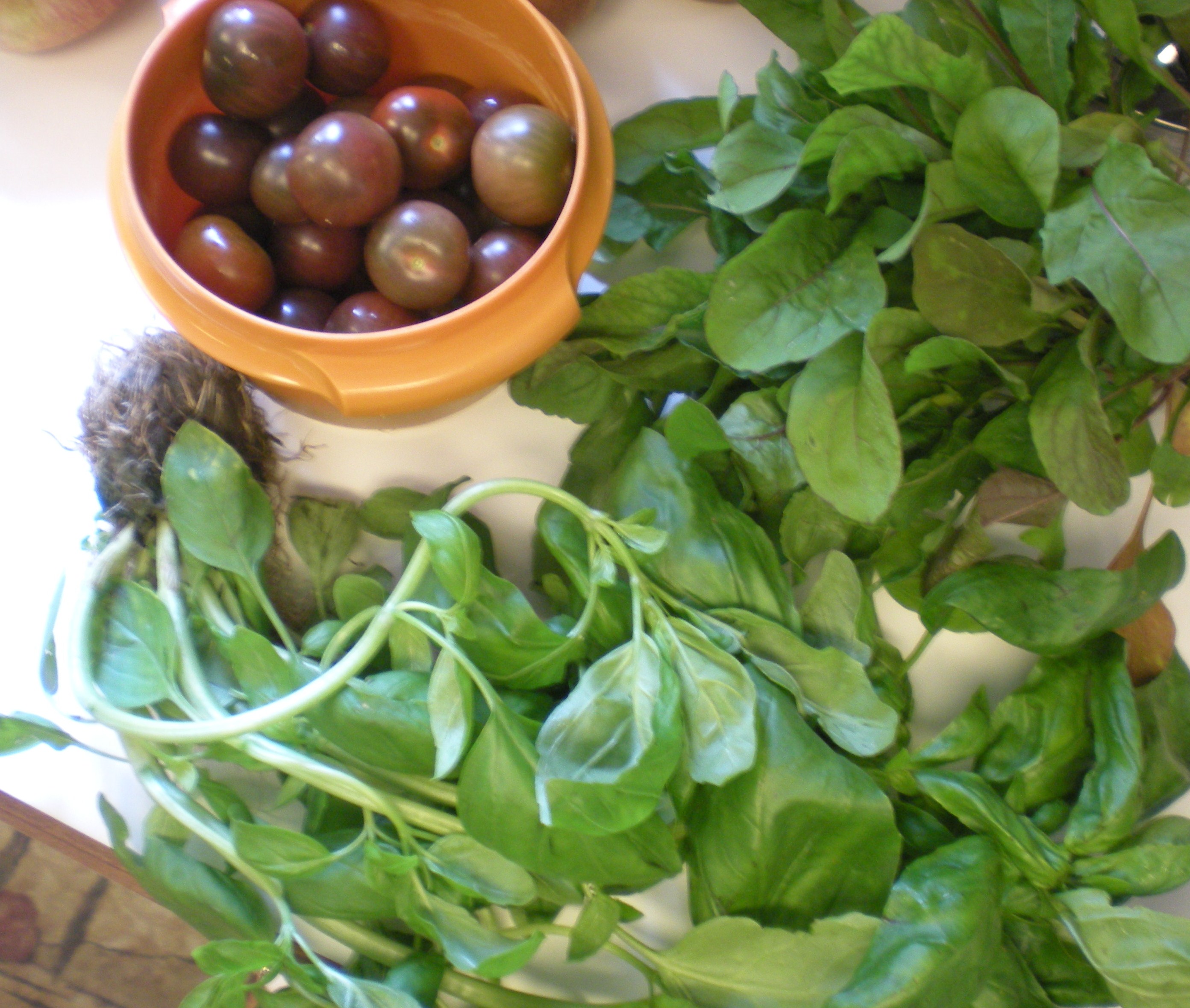
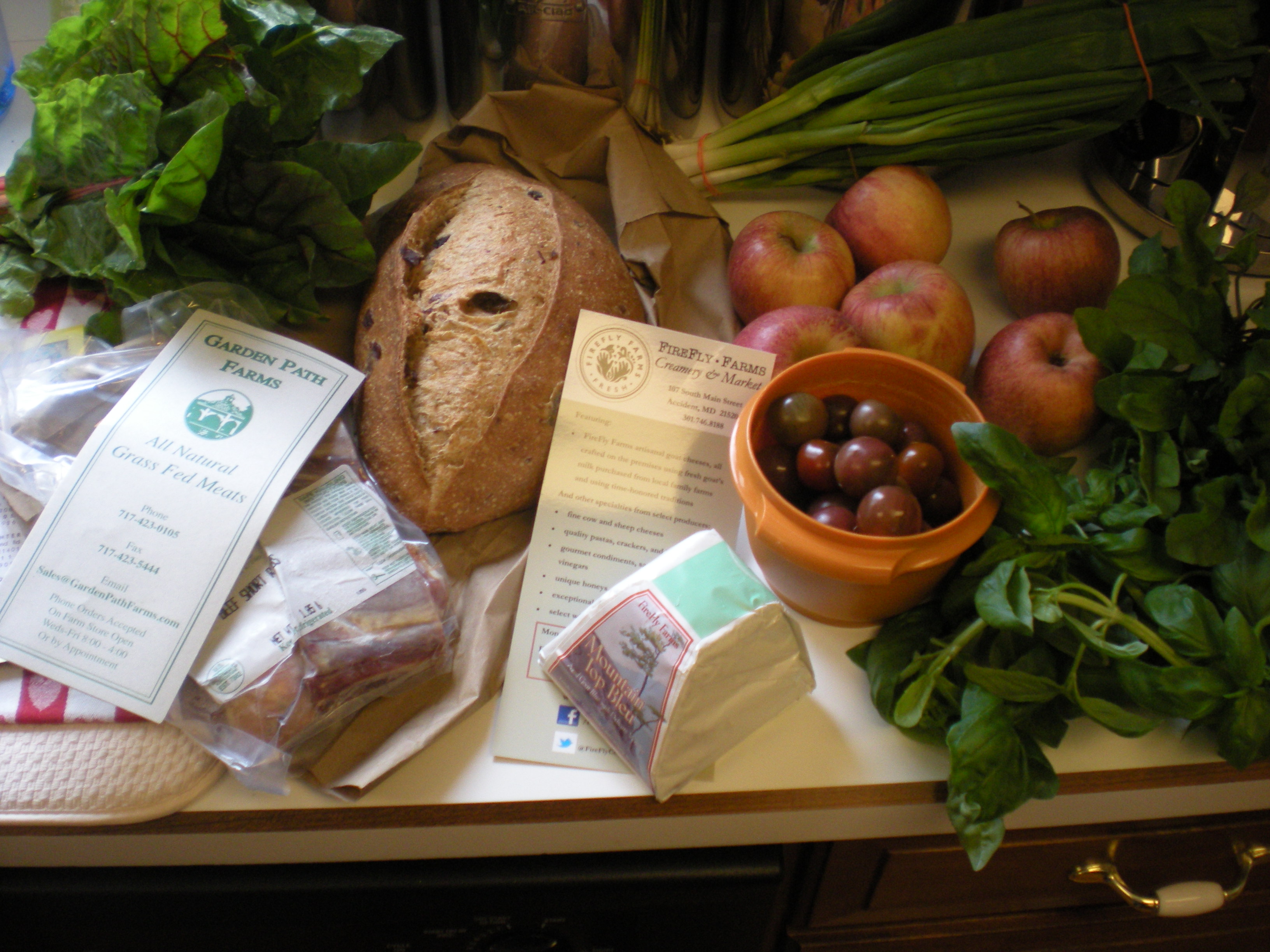
We got apples, spring onions and chard from Spring Valley. It is so good to see spring onions. I love them with microgreens, like the ones in yesterday’s CSA delivery. Down to Firefly Farms for cheese, and Mock’s Greenhouses for the wonderful cherry tomatoes, hydroponically grown basil and arugula.

I am going to make my own flatbread dough with the Union Mills flour I picked up at Breezy Willow a while ago, and put arugula, bleu cheese and Boarman’s sausage on it one night next week. The hydroponic greens and the high tunnel cherry tomatoes from Mock’s are a hint of what is to come in summer. The basil is intensely scented, making me want to create a caprese salad if only I had some fresh mozzarella. The tomatoes burst with flavor and you wouldn’t know they were “hothouse” tomatoes unless someone told you.

I was talking to them and yes, they will be a supplier to Wegmans in Columbia just like they are in Frederick. Woo Hoo! Their bibb lettuce is incredibly sweet and delicious but today I already had containers full of greens and spinach at home from the CSA. This week we will be feasting on fresh salads.

Stopped at Garden Path Farms to pick up short ribs to use in the crockpot tomorrow with the chard bought at Spring Valley and the CSA mustard greens.

Soaking cranberry beans from MOM’s overnight tonight, so dinner will be greens, beans and ribs in the slow cooker. I will use the last pint of my turkey stock from the freezer to make this. Another real food dinner made from scratch.

After picking up these goodies, we hit Lebanese Taverna for a kafta sandwich. There are so many interesting restaurants on Ellsworth just behind City Place. Want Pho? Peri Peri? Thai? Lebanese? Potbelly Sandwiches? The list is endless. 100+ restaurants in the surrounding area. Free parking in the Wayne Avenue garage. A Whole Foods across from the parking garage as well in case you aren’t already shopped out.

Take a cooler in your trunk. Hit the market. Next week they go back to spring hours. From 9 am to 1 pm. Have breakfast, brunch or lunch and get in shape for our markets to open in six weeks. Can’t beat fresh veggies, meats, cheeses, eggs and fruit from area farmers.

And follow me on my GGSAC* journey. The *Great Grocery Store Avoidance Challenge*.

hocofood@@@

Scrapple: The Last Frontier

Posted on

OK, I am truly becoming my dad. I have gone over to the dark side and made my own scrapple. But, it isn’t my fault. It is Mark Bittman’s fault. Darn that “How to Cook Everything” App on my iPad.

You see, I needed to make breakfast for the last week of the Dark Days Eat Local Challenge. I had one pound left of Woodcamp Farms sausage in the freezer.

I was actually looking to make sausage patties with some interesting seasonings, and maybe do pancakes with the rest of the local buckwheat. But, opening the app and typing in sausage, it came up with lots of boring recipes, and SCRAPPLE!

OK, not everyone loves scrapple, but being almost 100% German background, and growing up with the scent of scrapple a normal Sunday morning wake up call, as my dad fried it up crispy and served it smothered in ketchup, how could I resist making my own.

We used to buy our scrapple at Lexington Market. My dad worked downtown as a policeman, so Saturday he brought home scrapple. Made from whatever was left of the pork. Still, nothing in the grocery stores approaches that scrapple.

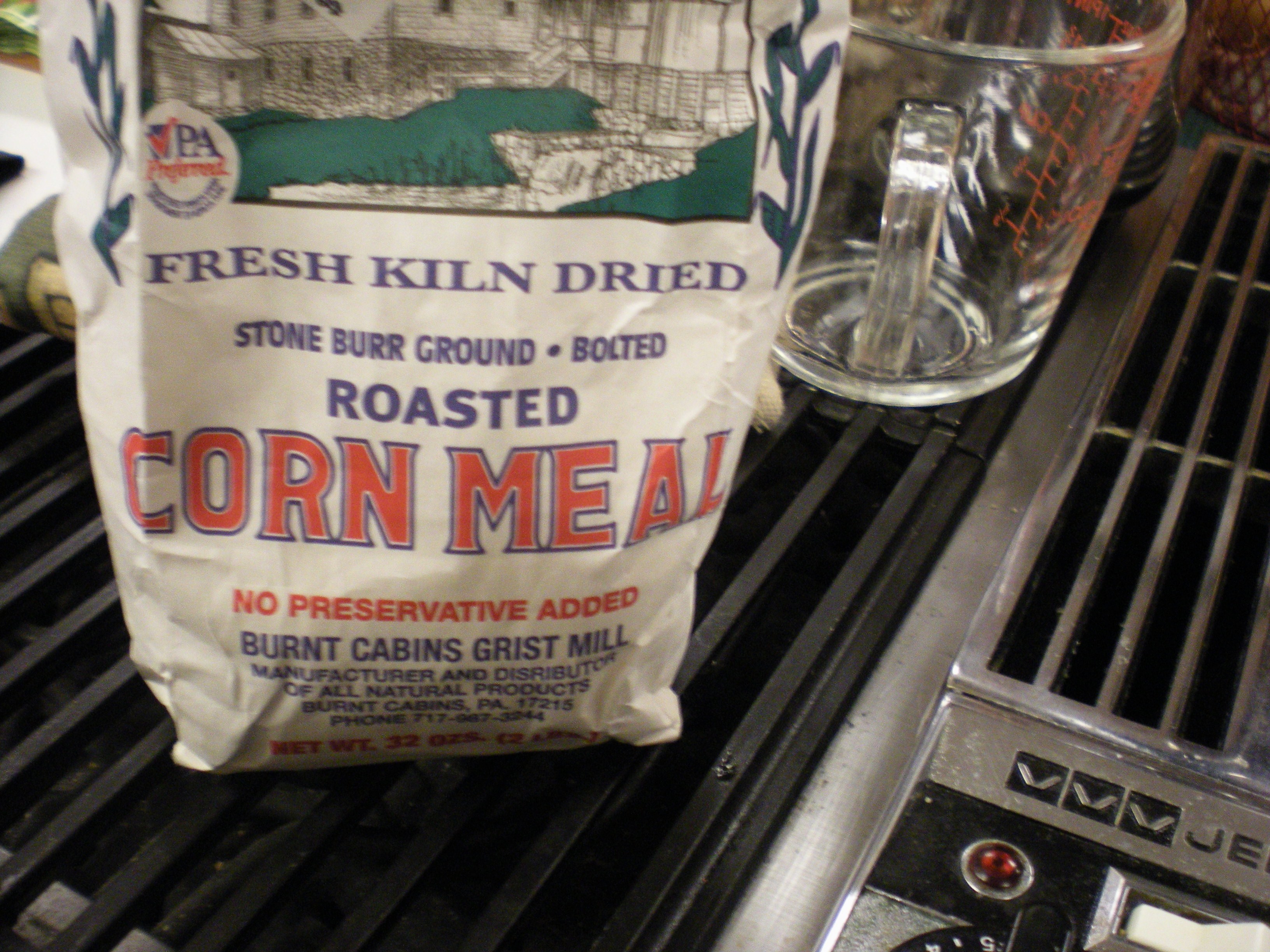
I was hooked. I needed to try this. I even made it local. And, you could make it even more local than I did. I had cornmeal on hand. Not from up the road, but from PA. You can get cornmeal from Union Mills in Carroll County. But this is all I had.

This is the cornmeal I used in this killer polenta a few weeks ago. The Bittman recipe calls for grits or cornmeal. We don’t have local grits, so cornmeal it was. It also calls for making a double recipe of the grits. Don’t do it. Too much cornmeal and not enough sausage. Next time I make this I will use about 2/3 to 3/4 of the amount called for in the grits recipe.

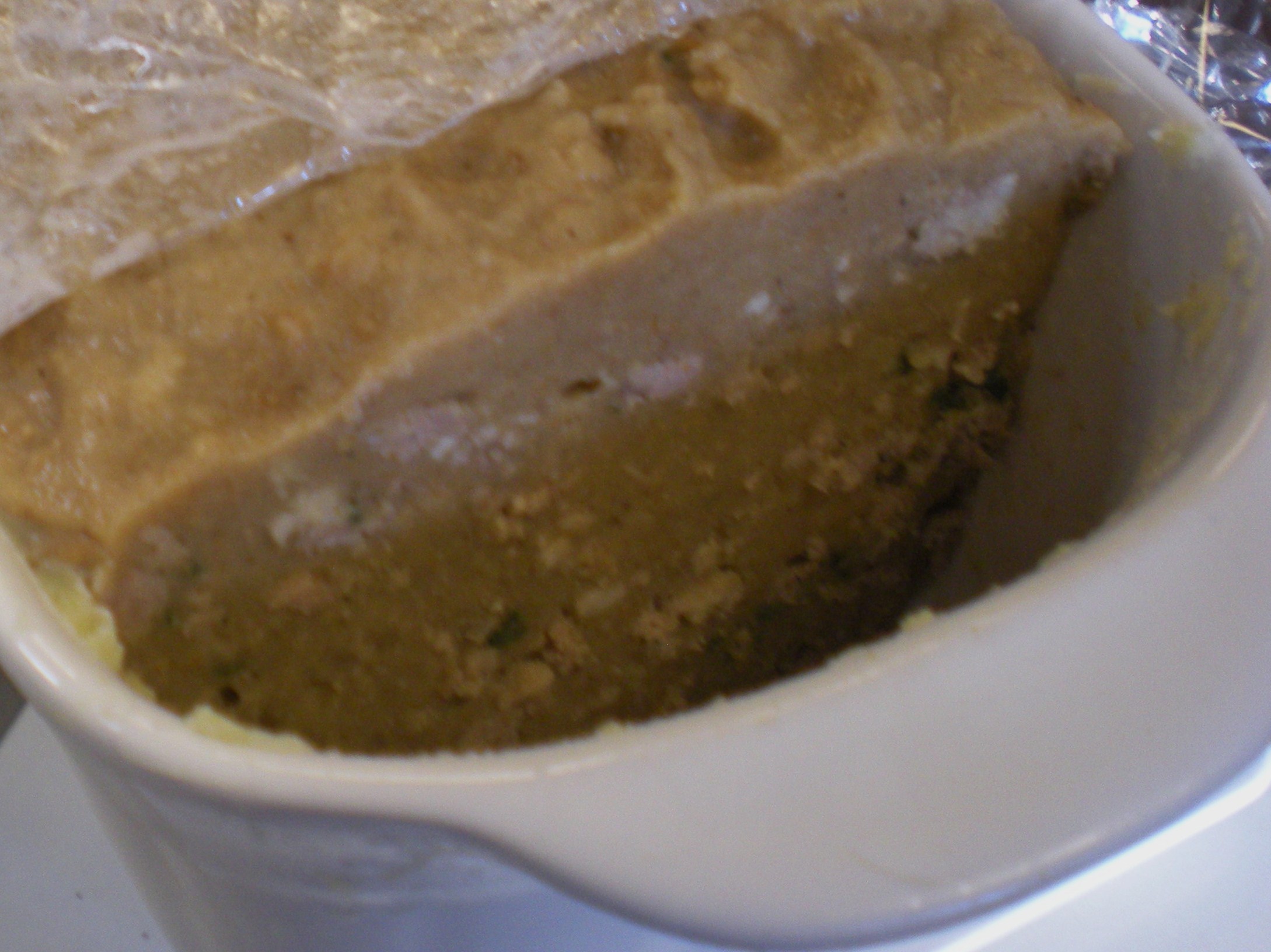
You can see when I cut it this morning to fry, there is way too much filler for the pound of sausage. If you are trying to eat less meat, it works but it is off a little on proportions. You can also see the little bits of fresh sage from my herb garden.

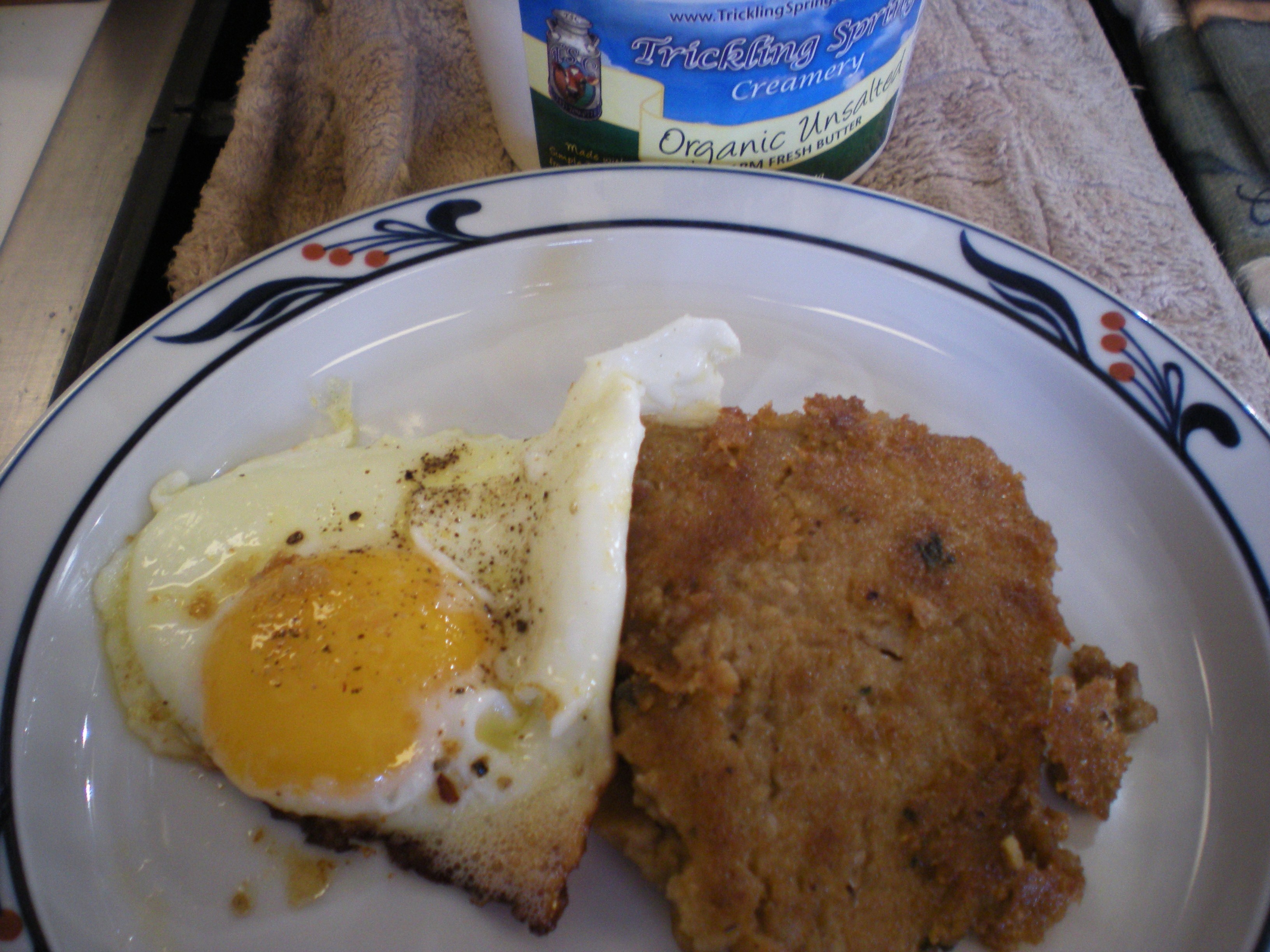
Cook it all up with a couple of local eggs, and serve. The recipe is after the pictures below.

It looks pretty good, and it was tasty. My husband thinks it needs a little more kick, but this was an eat local challenge and Tabasco isn’t local. It also fell apart as I was plating it.

Local Sources: Trickling Springs for the butter to fry it. Zahradka Farms CSA eggs. Woodcamp Farm pork sausage. Burnt Cabins Roasted Cornmeal. Sage from my garden.

To make it even more local and mostly from Howard County, use: Bowling Green Farms butter, Breezy Willow eggs, TLV Tree Farm sausage, and Union Mills cornmeal, available at Breezy Willow. This way it would be almost 100% Howard County sourced, with the exception the cornmeal from Carroll County.

The recipe, courtesy of How to Cook Everything –

Make the cornmeal polenta, or use grits. The recipe calls for 5 cups or water, boiling. Whisk in two cups of grits or polenta. I believe you should make this with 3/4 of what they call for. Cook, covered, and occasionally stirring, until smooth. Add water if necessary to keep it from thickening too much. You will know if it is too thick. You can’t stir it. Add salt and pepper and butter to taste while making. Be careful tasting. It is molten.

In the meantime, cook the sausage until done. You need at least two cups of cooked sausage. One pound will just get you there. I would go heavier on the sausage the next time I do this.

Mix the sausage into the polenta and add at least a tablespoon of fresh sage. I used close to two tablespoons, because there was so much polenta made. Maybe grits would cook down more but the polenta was really thick and there was quite a bit of it.

Pour into a buttered loaf pan and refrigerate overnight. Cut in slices and fry in whatever you want. I used butter to keep it local. Serve with eggs, any way. I like sunny side up when I have fresh eggs from the CSA.

My husband had a piece of Atwater’s bread, toasted, with his. I didn’t think it needed the toast, as the scrapple is hearty.

So, Dark Days are done. I made it all the way to the end. Now, it will be easier to cook with local foods as we get into growing season.

Try making scrapple this summer. Everything is right up the road, at our markets in Howard County.

hocofood@@@

The Final Week of the Eat Local Challenge

Posted on

In November I signed on to prepare at least one meal a week for sixteen weeks using locally sourced items. Locally being defined as within 150 miles of your home. The Dark Days Challenge is the Title. Over 100 people signed up. About 30-40 of us made it through the challenge.

Highlights to me of my meals included learning to make sweet potato gnocchi, making roasted cornmeal polenta, and using turnips far more than I ever did in the past.

These ingredients produced this soup. Jerusalem artichokes, leeks, apples and turnips. Thick, rich and satisfying.

The South Region, which included participants from MD, VA, NC, SC and TX, was one of the most active regions. Not surprising because it is fairly easy to source local items year round here. The northern participants struggled more.

This last week had a theme for us. Make breakfast. So far, I did eggs one day, but I intend to finish the challenge before Sunday with pancakes and sausage patties. Not going to go out without putting forth some real effort. Eggs are too easy.

In Howard County, we are lucky to have a year round CSA deliver. We also have access to meats and dairy from local farmers. We can also get produce from Amish markets in the area, and three year round farmer’s markets in Tacoma Park, Silver Spring and Dupont Circle. A Saturday morning visit to Silver Spring yielded enough fresh goodness, plus my Friday CSA delivery, to make Giant or Safeway superfluous in my life. Like the week shown below.

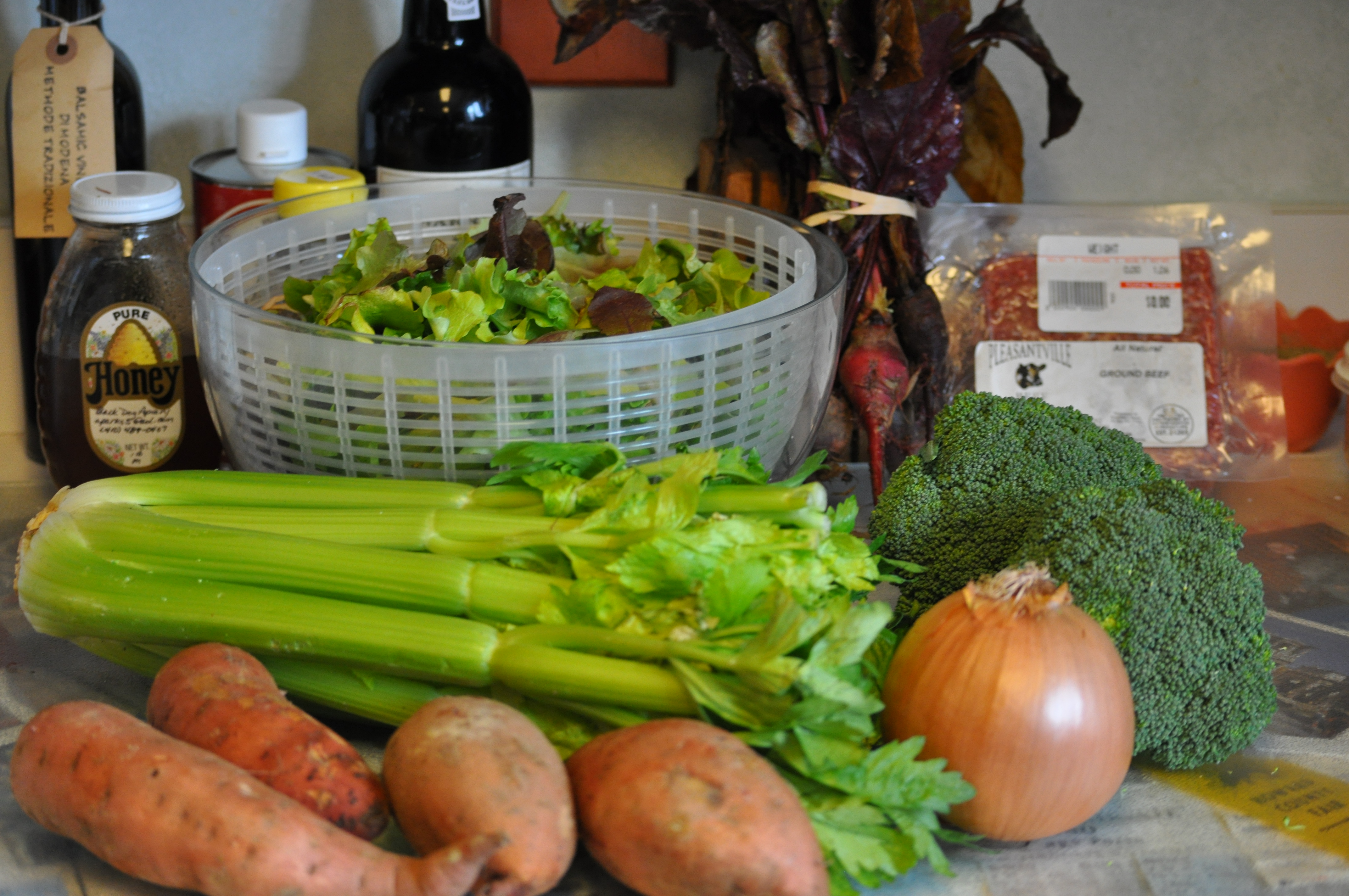
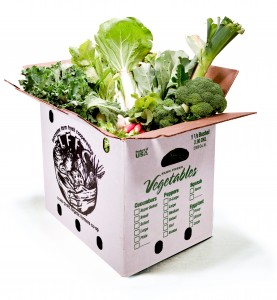
Friday Delivery CSA – beets, onion, sweet potatoes, celery, microgreens, broccoli, and Angus ground beef.

Saturday morning at the market – including chorizo, bread, mustard, high tunnel grown tomatoes, bibb lettuce, and not pictured, fresh basil.

Those of us who garden had put aside some frozen or canned items to use. I ran out of almost everything in my freezer, with one pint of turkey stock left. I used my last pickles in egg salad a few weeks ago. I still have half a jar of concord grape jelly from my neighbor, and enough frozen veggie items to make one more batch of veggie stock.

It made me think about what to do in the future. I intend to use Larriland Farms and Butler’s Orchards quite a bit this year to augment my garden and freeze/can items to use. I will also make good use of the summer CSA and farmer’s markets to get items to put away.

Why, you ask? Because, for me, eating fresh foods keeps my allergies at bay. It also limits my exposure to GMO vegetables, and to meats full of antibiotics and hormones. I feel better when I do this. Besides, serving fresh food to my friends and husband, prepared by me with love, is one of the things I enjoy best about being retired. Yum, TLV Farm kielbasa with CSA veggies, Canela bread from Boarman’s, and Black Ankle Syrah. Goodness, from Howard County and the surrounding area. Doesn’t get much better.

hocofood@@@

In Search of Salsify

Posted on

Back in December, in our fall CSA from Sandy Spring, we got salsify in the box. A fuzzy strange looking vegetable.

I had no idea what to do with it, but went on line and started reading. It turns out that it is in the sunflower family, and the vegetable we see is the root of the purple salsify plant. It isn’t very common around here, but has been cultivated in other parts of the world to a greater extent.

It tastes like oysters, believe it or not. I went and found a huge collection of recipes on this site, vintage recipes. For one of my eat local challenge meals, I made the simple fritters recipe from the Boston cooking school cookbook of 1896. Cooking all of what I had from the CSA, and wishing afterwards that I could have had more of it.

I started searching for it. Found some really hard, gnarly ones at Harris Teeter in Maple Lawn. They were OK but not as flavorful as the fresh ones. It is going to be a quest at the farmer’s markets to ask if anyone does plant them. Since they are the root of a sunflower, I am guessing it will be pretty late in the season for me to see local ones, if at all. I may just have to identify a source and buy it in the fall or winter when it is ready to harvest.

If not there, I will also be checking out whether the new Wegman’s will have them. They did not at the Wegman’s in Frederick, although they have another root veggie I like, sunchokes. That is a topic I will write about sometime in the future. I find it a fascinating byproduct of the CSA, veggies you would not pick up on your own and make.

Anyone ever found salsify around here?

hocofood@@@

Keeping It Mostly Local – Pizza

Posted on

Last night we felt like having pizza. But, I refuse to be influenced by TV commercials enticing me to just pick up a frozen pie or calling for delivery pizza. Making it myself is really not that difficult, as long as I buy dough, or find a flatbread that works in the oven or on the grill.

I picked this one up from Roots the other day.

It is a thick crusty base that will hold up to lots of oil and sauce and cheese without getting soggy. Making my own toppings is what I like about pizza. Dig around in the fridge and see what looks good.

I made a sauce using local Maitake mushrooms bought at MOM’s, Hummingbird Farms cherry tomatoes bought at Roots, garlic and onion from my CSA, a bit of sauce from Quaker Valley in PA, bought at the Silver Spring Farmer’s Market, and some organic tomato paste, bought at the Common Market a while back. Sweated the onions and mushrooms. Added the rest and left it on low to simmer while I got the cheeses on the crust.

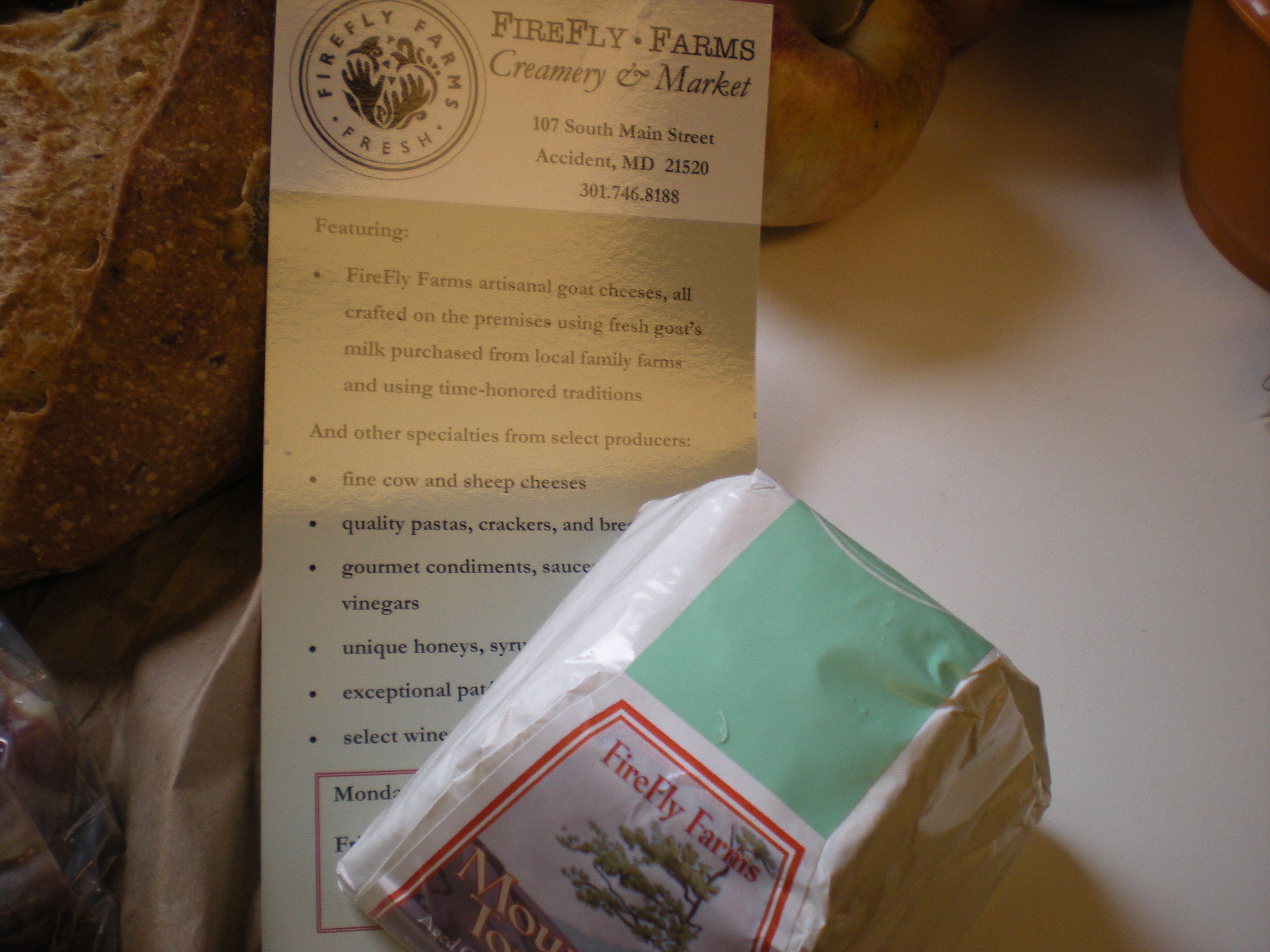
Used up some Firefly Farms chevre, and some tomato basil spread from Bowling Green Farms. Put the sauce on top of the cheeses. Ready for the oven.

Baked at 400 degrees for 20 minutes to make it crispy.

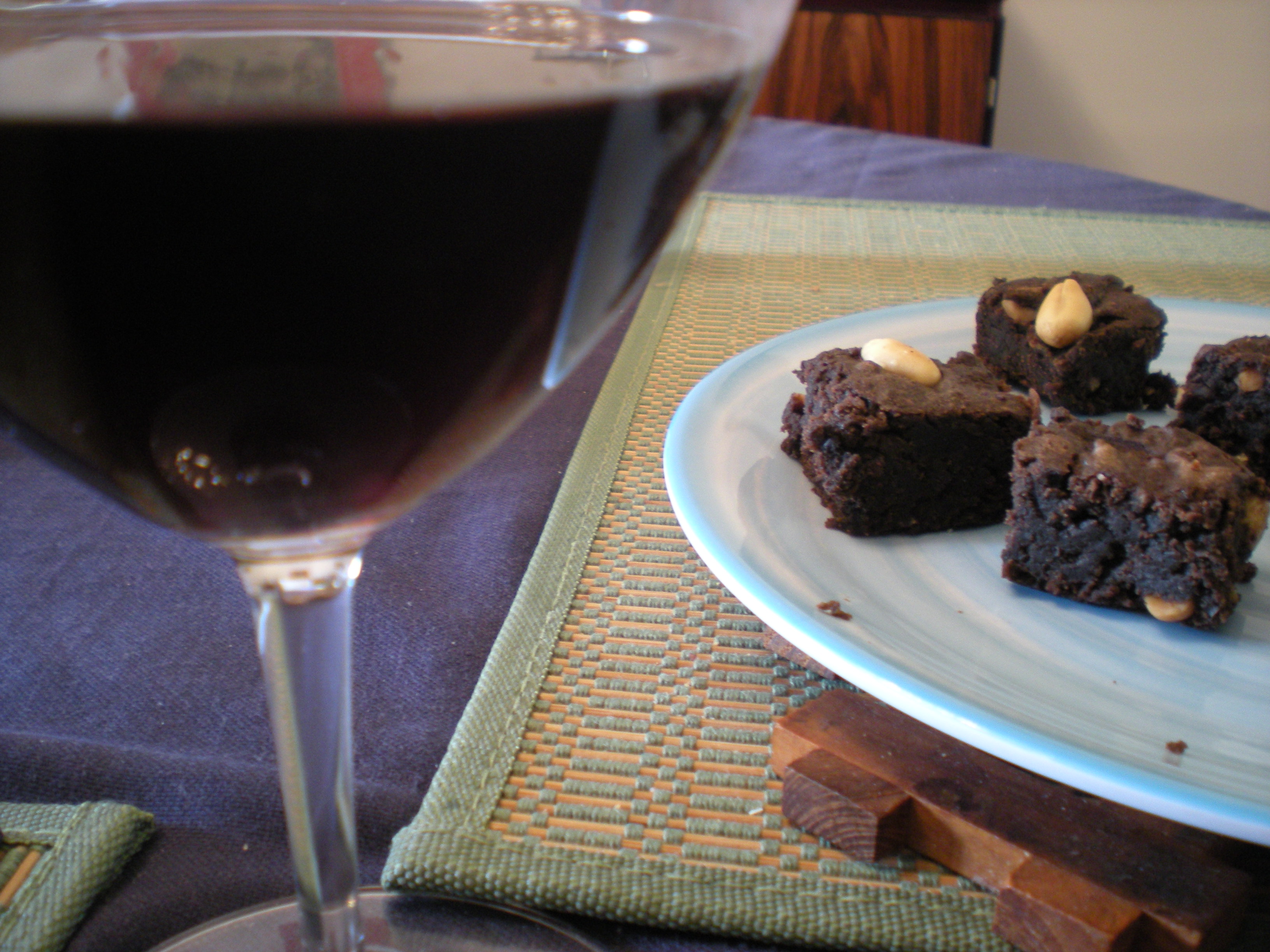
Served with a 2002 Linden Cabernet Franc, the last of this year and varietal in the cellar. As usual, the wine did not disappoint, nor did the pizza. The wine did not exhibit that bell pepper taste the francs from VA usually do. It was well balanced and still had quite a bit of fruit for a ten year old VA wine. If I recall, this was an OK year after a really good one in 2001. This wine proved that even in a less than optimum year, Linden made wines with longevity.

What made this dinner even more fun were the brownies. Made with a mix and black beans and water. That’s all. No eggs, or oil. I did jazz them up a bit with peanut butter and peanuts, but you can make them just with the mix and beans. Look it up on line. Simple brownies, dark, dense and chewy. Great to finish the wine with them while watching the basketball games.
This was a mostly locally sourced meal, and yet simple to do. In just a few weeks the farmer’s markets will open across Howard County, and it will be really easy to pick up cheeses and mushrooms to make your own pizza. We will have to wait a while though to get good tomatoes, but until then, Roots has Hummingbird Farms hydroponically grown tomatoes, including the heirlooms.

hocofood@@@

Getting My Goat …

Posted on

… or finding ways to live with lactose intolerance. I already carry around little chewable tablets to deal with foods in restaurants and friend’s homes. As well as dealing with my love of cheese in the first place.

I use goat cheese more and more to avoid the unpleasant after effects of fresh milk cheeses.
Cherry Glen and Firefly Farms are my favorite local sources of goat cheese.

I now found a source of goat’s milk while shopping at Roots the other day.

Here’s to brownies and milk and no problems.

An Update to My Meat Sources

Posted on

HowChow inspired me to go back and look at a previous post about finding local meat sources.

So, I spent some time updating this post, with new links, more information and a couple of web sites to check out.

I wanted to focus on places I have used, and those near to us in the county. With all the talk about where our food originates, using butchers and farmers where you can check it out is even more important to those of us trying to eat foods that are better for us.

Use realtimefarms and localharvest to search in your area. Use your zip code and meat as the product. And, since the weather is so wonderful, take some out and grill it.

Happy hunting!

hocofood@@@

The Official First Day of Spring

Posted on

So, today officially spring begins even though it has been evident for days that the calendar and the flowers, trees and shrubs have already synched up.

The tulips in our yard are up. In Columbia, where I went today for a doctor’s appointment, they are already way ahead of us in terms of the color all around. We are a few degrees cooler and a few hundred feet higher in elevation than Columbia.

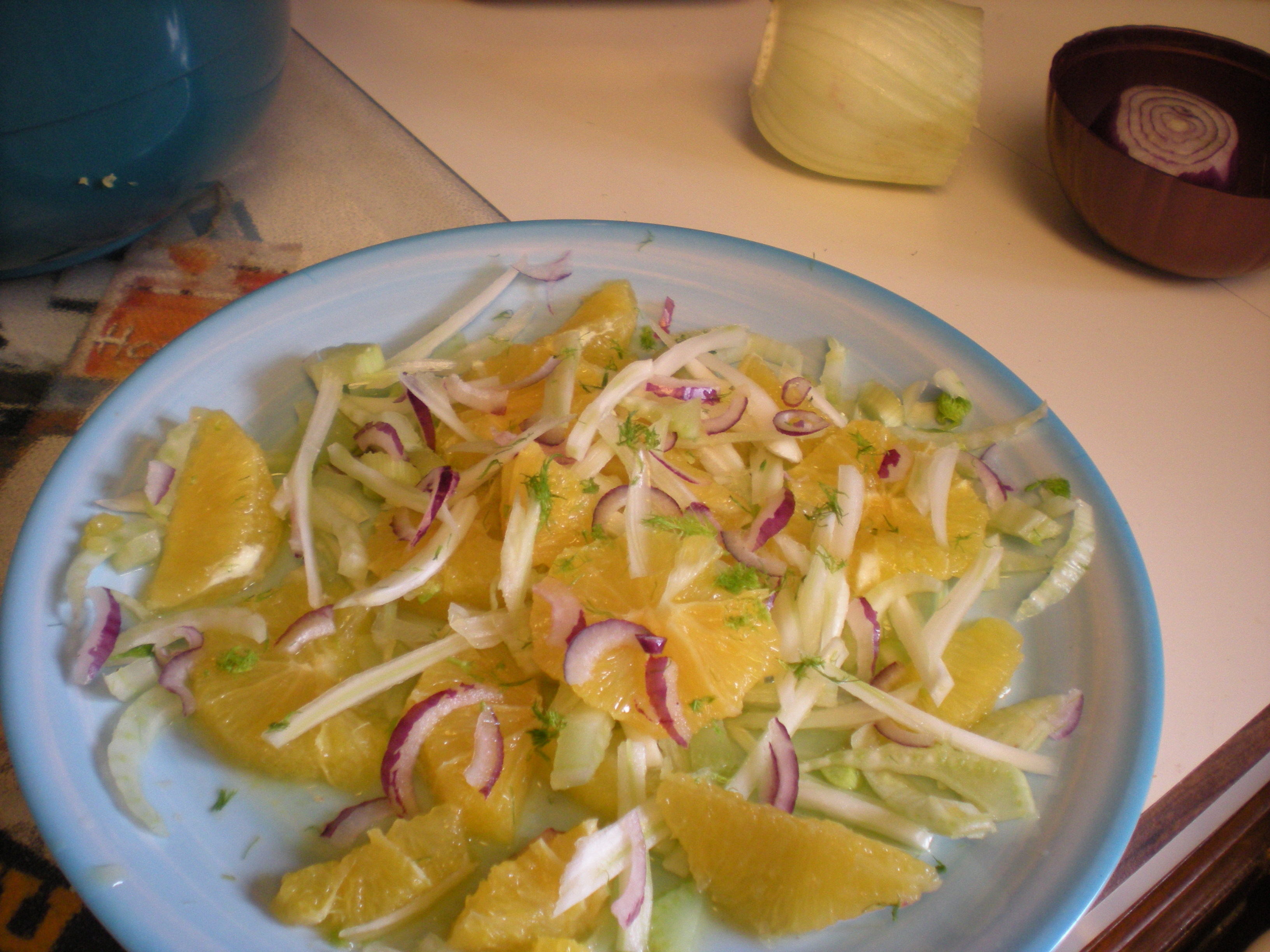
To me, my favorite thing to celebrate spring is fennel salad. Light and tart, full of the delicacy of the baby fennel, the tartness of juice oranges, and bite of red onion, I love making this every spring.

It will be dressed with the best olive oil I have, and sprinkled with sea salt and white pepper.

My other favorite thing to cook in spring is asparagus. We have wild asparagus growing out under our crepe myrtles. I keep going out there to look for it, but it usually doesn’t show up until mid April. Just checking to see if the warm weather has hastened the sprouting of them, but no luck yet. Asparagus frittata, yum!

As for my trip to Roots the other day, I had to indulge in Hummingbird Farms tomatoes, from their hydroponic plantings. I know I really should eat tomatoes in season to get the best tasting tomatoes, but these beauties just called to me from the case.

I think they will be sliced open and served with Cherry Glen Gold goat cheese. Drizzled with St. Helena Olive Oil’s lemon infused oil, and some herbs de Provence. Truly a spring time pleasure.

Add to all that, my husband insisted on picking this up at MOM’s yesterday.

Their web site says it is mild. They lied.

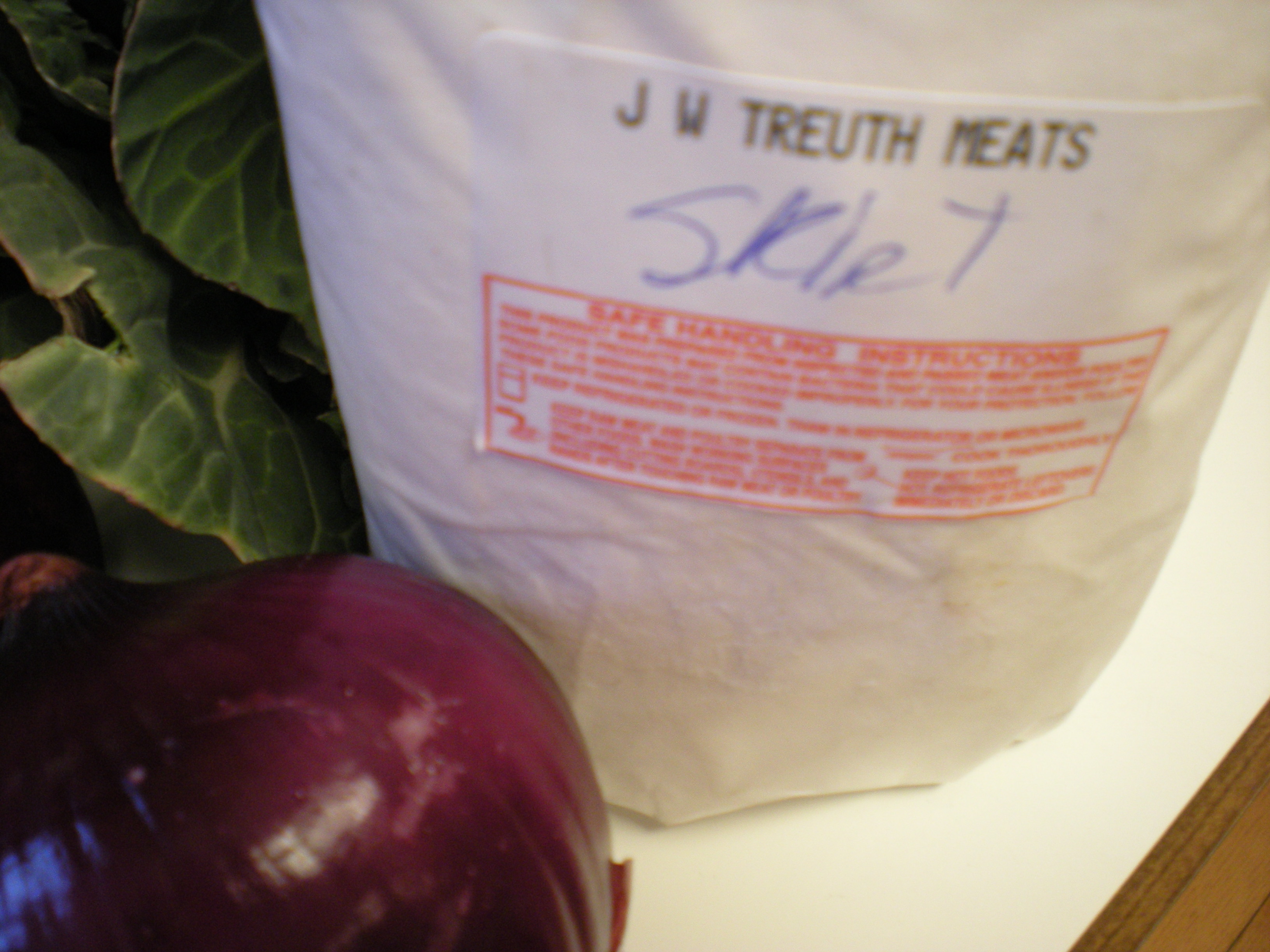
I think it needs something to mix it with, and serve it with grilled lamb kebabs maybe. I know, maybe I need to use this Treuth skirt steak.

All this great weather inspires me to get out and grill.

hocofood@@@

Getting Organic in a CSA

Posted on

Is it cheaper than shopping organic stores? What does it buy me? And, why do I care about organic? For me, step by step, I am replacing processed and treated foods to limit my allergic reactions to the preservatives. The summer and fall Sandy Spring CSA was a large contributor to that switch. For 33 weeks, between the summer and fall CSAs, I ate almost 100% organic vegetables and IPM or organic fruit. Sandy Spring, the largest CSA delivering to Howard County at the Conservancy and in West Columbia off Cedar Lane on Thursdays, is my source for organic veggies.

Continuing into a winter CSA helped, but the winter Zahradka Farm CSA is not certified organic. They are the only year round CSA in the area. They sell at Glenwood Market. A quote from their web site.

“Our farming practices are modeled after the Certified Organic guidelines for Md. as often as possible. If we are having problems with our crop we resort to IPM (Integrated Pest Management), and we are always open about what is going on with our farm to our customers.”

I also buy at our farmer’s markets in the county. Breezy Willow Farm is certified organic. It is the only one at the farmer’s market that is certified so far. They also offer a CSA for those who want a regular organic source of veggies, bread and eggs. I buy what I need from them weekly to supplement my CSA delivery, particularly their homemade breads and their eggs. If my Thursday delivery doesn’t include something I need, I turn to Breezy Willow as my first source. The picture below taken of Breezy Willow with South Mountain Creamery in the background from Glenwood, is courtesy of the Howard County Farmer’s Market Facebook page.

I created a tag, value of CSA, that will track what I get weekly in my organic CSA, and compare it to the cost of buying organic veggies at the local supermarket and/or coop. Since much of what I get is pretty mundane, places like Harris Teeter will include many of the veggies in my box, but Roots, David’s or The Common Market will be more likely sources for tatsoi, mizuna, sunchokes, garlic scapes, and the other more exotic veggies. I may use Breezy Willow’s pricing as well, since I go to the Glenwood market most weeks.

Last year’s summary tables tell me I got 124 different items over the course of the 25 weeks. That could be difficult to track, but I am trying. Here is a list of a typical delivery from our summer CSA last year, from September.

1 Head Green Leaf Lettuce – Certified Organic – Green Valley Organics
2 Large Eggplant – Certified Organic – Farmdale Organics or Windy Hollow Organics
1 Bunch Green Mustard – Certified Organic – Maple Lawn Organics
1 Bag Baby Mixed Sweet Peppers – Certified Organic – Organic Willow Acres
1 Bunch Cherry Belle Radishes – Certified Organic – Pine Hill Organics
2 Small Heads Red Butterhead Lettuce – Certified Organic – Riverview Organics
1 Bag Sweet Candy Onions – Certified Organic – Crystal Springs Organics
2 Delicata Squash – Certified Organic – Green Valley Organics
1 Bunch Tatsoi – Certified Organic – Hillside Organics
1 Bag Sweet Potatoes – Certified Organic – Pine Hill Organics
1 Bunch Curly Parsley – Certified Organic – Noble Herbs
1 Butternut Squash – Certified Organic – Soaring Eagle Acres
1 Package Portobello Mushroom Caps – Certified Organic – Mother Earth Organic Mushrooms

This CSA cost us $30/week, and every week there were 10-14 items in the box. The week above yielded 13 items. Therefore, doing the math, buying 13 organic items that averaged $2.33 each would show you the value of this particular season in the CSA. Some years may not be as productive, depending on the weather. 2011 was a very good year for Lancaster Farm Fresh Coop, the parent non-profit supplying Sandy Spring CSA.

A pic from an August delivery:

The list:

Monday, August 8 – Full Share

12 Ears Sweet Corn – Certified Organic – Organic Willow acres or Sunrise Ridge Organics or Soaring Eagle Acres or White Swan Acres
*Corn is one of the most difficult crops to grow organically. If you should find a worm in any of the ears – don’ panic! Simply cut those areas off and enjoy the rest.

2 Yellow Straightneck Squash – Certified Organic – Echo Valley Organics
1 Bag Yukon Gold Potatoes – Certified Organic – Echo Valley Organics
2 Pints Mixed Cherry Tomatoes – Certified Organic – Farmdale Organics
1 Italian Eggplant – Certified Organic – Farmdale Organics
1 Bag Red Tomatoes – Certified Organic – Plum Hill Farm
1 Bag Jalapeno Peppers – Certified Organic – Millwood Springs Organics
2 Heads Small Red Butterhead Lettuce – Certified Organic – Riverview Organics
1 Cantaloupe – Certified Organic – White Swan Acres
1 Bunch Curly Parsley – Certified Organic – Noble Herbs
3 Green Bell Peppers – Certified Organic – Maple Arch Farm
1 Bag Red Onions – Certified Organic – Deer Hollow Farm

Twelve items this week. $2.50 per item average. Again, all organic including the cantaloupe. Two pints of heirloom cherry tomatoes counts as one item. Where could you find a pint of heirlooms for $1.25? A dozen ears of organic sweet corn. At least $4 a dozen, I recall from seeing it at Roots last year, and thinking what a bargain we were getting.

As for the volume of produce here, thankfully every week included an herb, which lasted in the veggie drawer for many weeks, allowing me to use fresh herbs for most of my cooking. We did end up freezing tomatoes and canning pickles from cucumbers.

I even canned “dilly beans”. For a vegetarian or a less meatarian, having fresh produce of this quality will easily feed a couple for most meals a week. We used all the greens and lettuces in salads for lunches. The hardest thing to use up, for us, were the eggplants and squashes. Lots of ratatouille, eggplant parm, lasagna, and I started making chocolate zucchini bread to take to the conservancy.

Follow along this spring, summer and fall as I talk about what I get, what I do with it, and what it would cost to do it differently.

hocofood@@@