Tag Archives: value of CSA

Summer CSA Week Three

Posted on

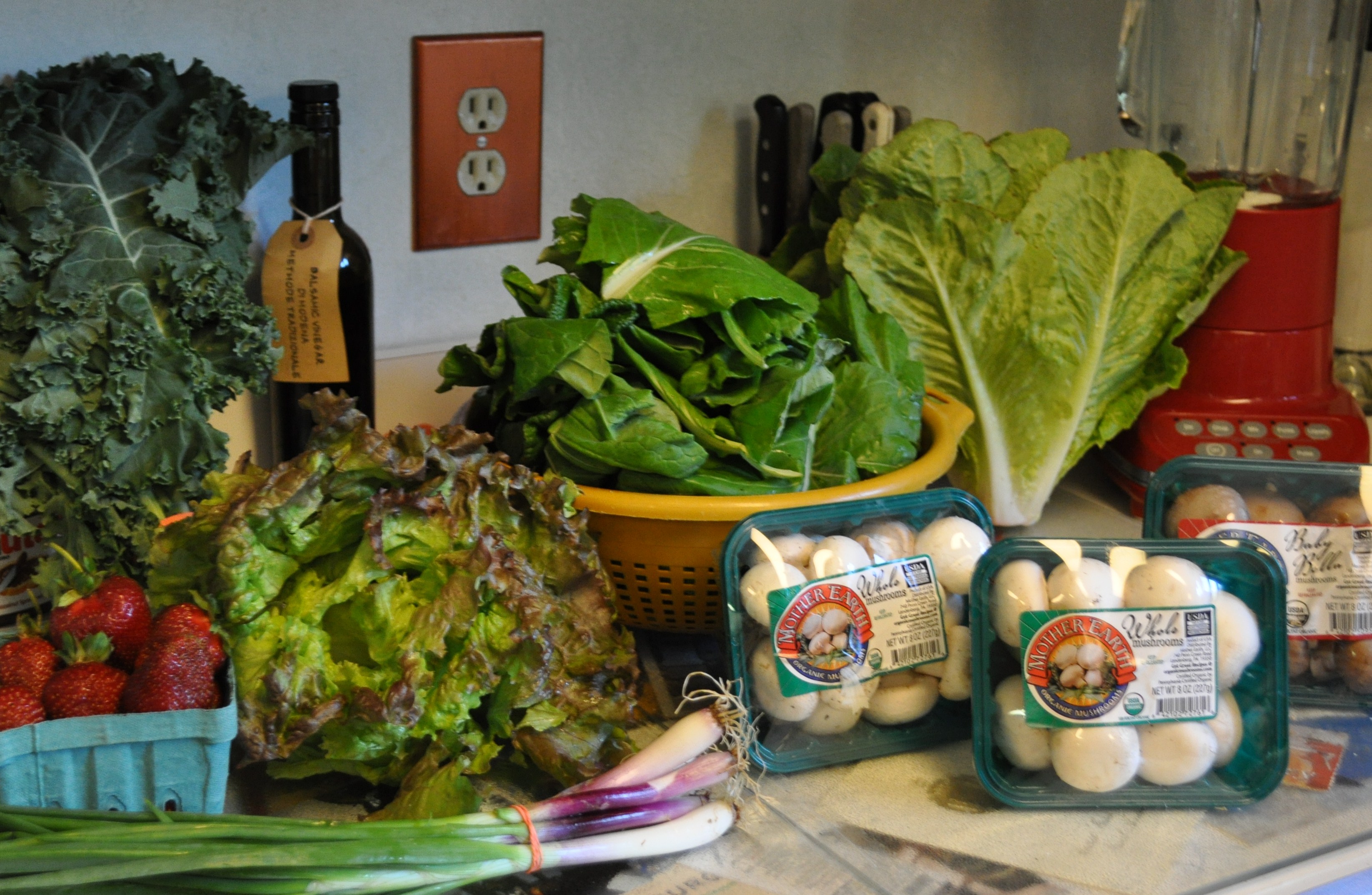
I needed a wide angle lens and I had to stand on a stool to get it all in the picture. This week, the box was chock full of goodies.

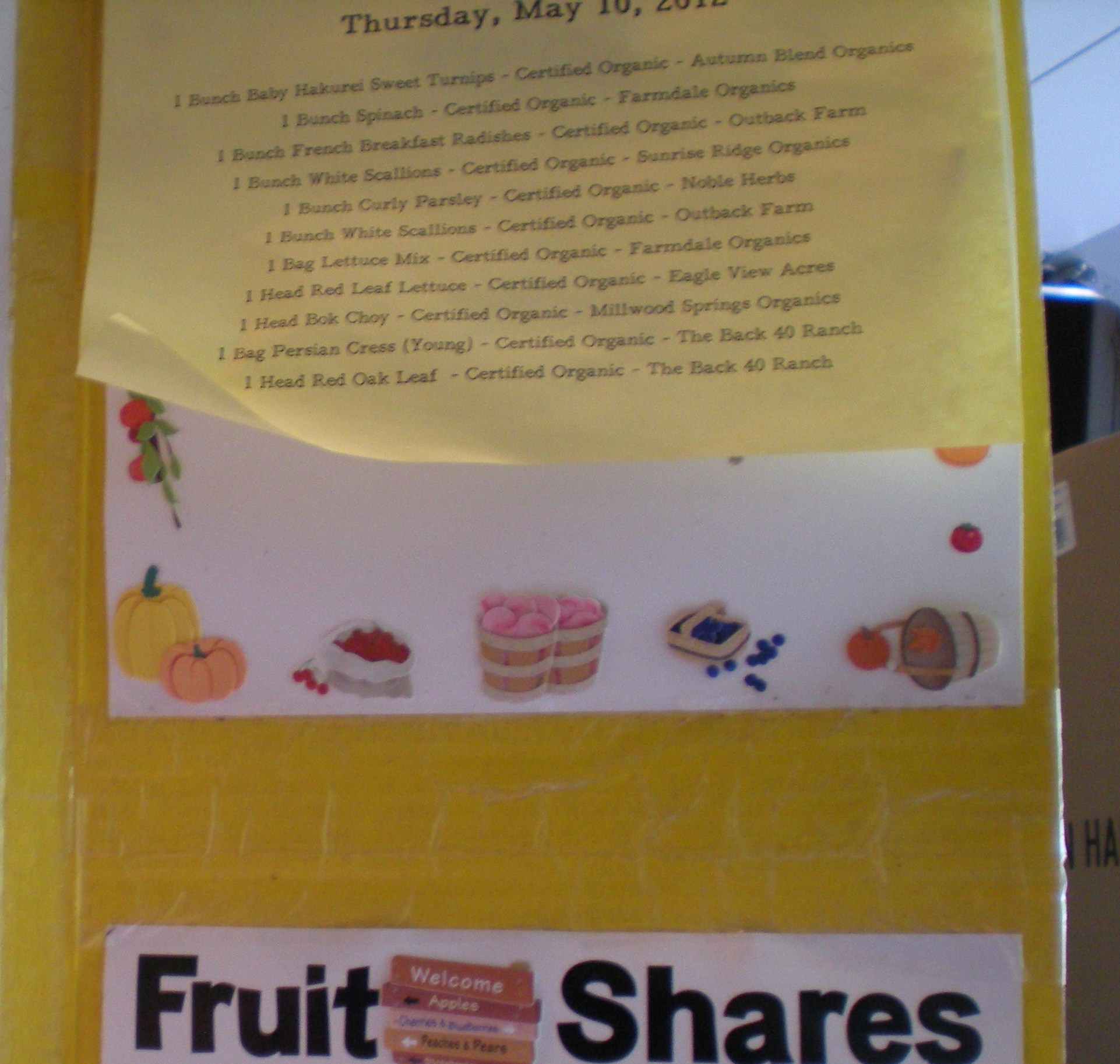
Twelve items. Yep, we got to the pick up site and found the boxes full of veggies. The list from the site:

A peek down into a loaded box:

I swapped the kale for a second package of garlic scapes. I want to make another batch of pesto to put in ice cube trays and save for winter cooking. Easy, and so good to use in the dead of winter.

My cost analysis this week yielded even bigger savings than the previous weeks.

Lettuce mix – 18 oz. would cost $10 at Roots. Scallions $1.69. Garlic scapes $2 a bunch X 2 = $4. Bok Choy $3.69. Spinach $3. Collards $3. Radishes $2. Turnips $2.50. Kohlrabi $3. Rainbow Chard $3. Broccoli $2.50. Total for equivalent of organic and farm raised veggies is $38.40. I pay $29.75 a week for the CSA. Again, this week’s organic haul is a bargain. Total savings for the three weeks is $21.15. In good years like this one so far, CSAs are a real bargain, but the risk of a bad year is always out there.

Did I use everything last week? All but the kale, which I swear will become kale chips Sunday or Monday. A couple of red scallions, and half a head of romaine. Everything else got used. So, I did OK in the consumption department. I will leave this post with a pic of one of the mostly local dinners I made using CSA and market foods, and a local wine.

The wild ahi wasn’t local, nor was the Pacific Red Pepper Tomato Soup that made the sauce. The ahi was braised in sauce with red scallions from the CSA, and olive oil. The bread is Atwater’s rosemary Italian. The potatoes came from the Olney market. The garlic scape pesto I made using local scapes, not local pine nuts and parmesan and olive oil. The wine, a lovely Vin Rouge from Glen Manor in VA was the perfect weight to complement the big flavors in the pesto and in the red pepper tomato sauced ahi. 2010 was a hot dry year. This wine was 14.9% alcohol but didn’t feel like it. Good balance of flavors. I saw an email from Jeff White, the owner and winemaker, that came today saying this Vin Rouge is running low. If you want a lovely wine in a Bordeaux style produced here on the East Coast, this is a good one.

I will be using more of the garlic scape pesto tonight making Israeli couscous with pesto, and a side of fresh English peas, asparagus and mint. Dessert will be fresh strawberries with buttermilk cake from the market, and vanilla ice cream, not local unfortunately since South Mountain is missing from the market.

This entire month I went to a chain grocery store once, and spent less than $50 getting staples. You can eat well in season using local markets and your CSA. I really love this time of year. The start of the fresh food season. Now, what to do with kohlrabi?

hocofood@@@

Sandy Spring CSA Week Two

Posted on

Never fails. Buy something at the farmers market and you get it in the box. Strawberries. Weren’t listed in the preview post, but we always know there are substitutions and often additions. This was a pleasant addition.

And yes, we are officially drowning in greens. But, I did swap cilantro for mushrooms. Better to make mushroom pate. We are allowed one swap a week. I swap herbs usually, since I grow so many of them. Cilantro without tomatoes to make salsa, not my thing. I also have more than enough greens to do pesto, which I will make since I stopped at Costco today and got pine nuts and pistachios. I do some interesting pestos. Like the garlic scape pesto in this often posted pic of mushroom pate and garlic scape pesto I took to a party.

Ok, I never knew what vitamin greens were until we got them. Now I know. They are interesting and can be made many ways. Learn something new every week. Don’t have any clue what they would cost if we bought them, but suppose they are as expensive as microgreens.

This week we got:
14 ounces vitamin greens
one bunch red scallions
one head green romaine
one head red leaf lettuce
one box cremini
one box white mushrooms
one bunch cilantro (I swapped this to get another box of white mushrooms)
one large bunch of green kale
one pint strawberries

All organic. The estimated cost came to somewhere between $32-$35 depending on where you source it. Finding all this is difficult as a source for vitamin greens means a trip to DC to a market there.

After two weeks, paying $29.75 a week for our CSA we have $38 and $34, which means we are up $12.50 for cost. If I used the cheaper cost for the mushrooms, which can be found at Frank’s Produce in Waterloo behind Costco for $1.99 for the white mushrooms, it would have been $2 less. But, the gas mileage to get there just for mushrooms would have negated the savings.

What am I going to make?

Kale Chips. I love them and make them once every spring.
Mushroom Pate
Lots and lots of salads.
Strawberries with ice cream from South Mountain, or buttermilk cake from Stone House Bakery (I will be buying both this Saturday at the Glenwood market.)

Two weeks in. Loving the surprises, and the quality of the veggies.

hocofood@@@

What’s In The Box?

Posted on

I now love Thursdays because they are CSA delivery days, my weekly Christmas on Thursday. We got our first box today for the Sandy Spring CSA. My new pickup point is an outparcel of Columbia off Cedar Lane. The list at the site had the confirmed contents of what was harvested and packed for the 40 or so members of this drop off point. We get to go to the web site and see in advance what they hope to pick and box.

CSA contents Week One

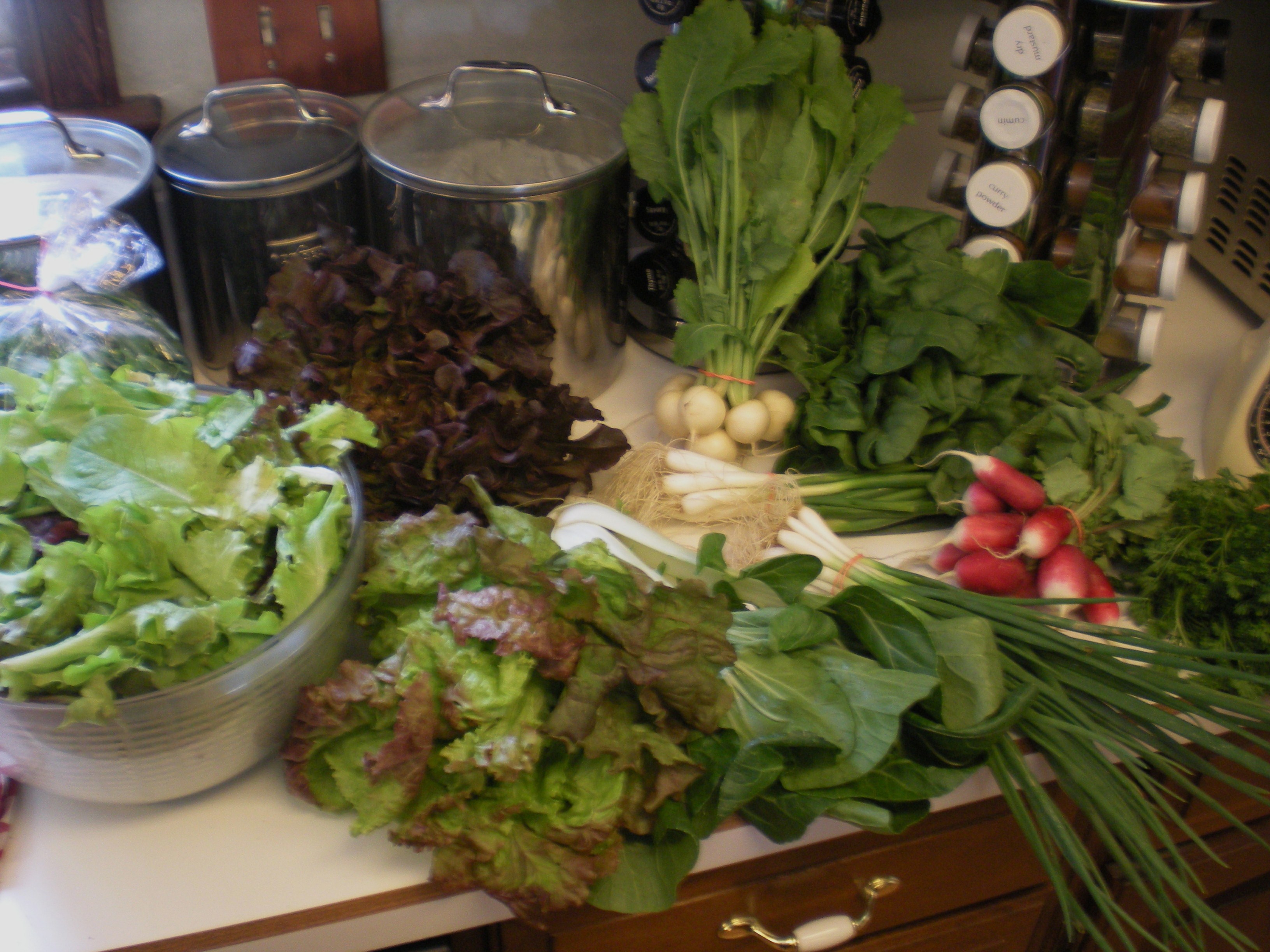
The collards were the only thing not included in the final tally. That’s OK because eleven items, mostly greens, is more than enough. I barely fit them all in a picture.

The hubby and I did a quick calculation of what we would pay at farmers’ markets and Roots for organic veggies like this. Since I had to stop at Roots to get organic chicken and shiitake mushrooms and ginger to make chicken chow mein with the bok choy, I got some of their prices. The tally here:

We got a pound of lettuce mix. At Silver Spring Market, for organic lettuce mix, it is $14 a pound. At Roots,$9.

We got a large bok choy weighing 12 ounces. At Roots, $3.69 a pound. Cost approximately $3.

Leaf lettuce, $2.49 each. We got two. So, $5.

Scallions, two bunches. Ours were a bit bigger than Roots. They were $1.69 a bunch. So, $3.50.

Parsley. $1.69.

Cress. $1.69, but ours was Persian cress and way more of it than the bunch at Roots. We had 10 ounces of cress. Estimate around $3 for ours.

Spinach $2.49 a bunch. Our 5 small bunches were about the equivalent of twice the size of their bunch. So, $5.

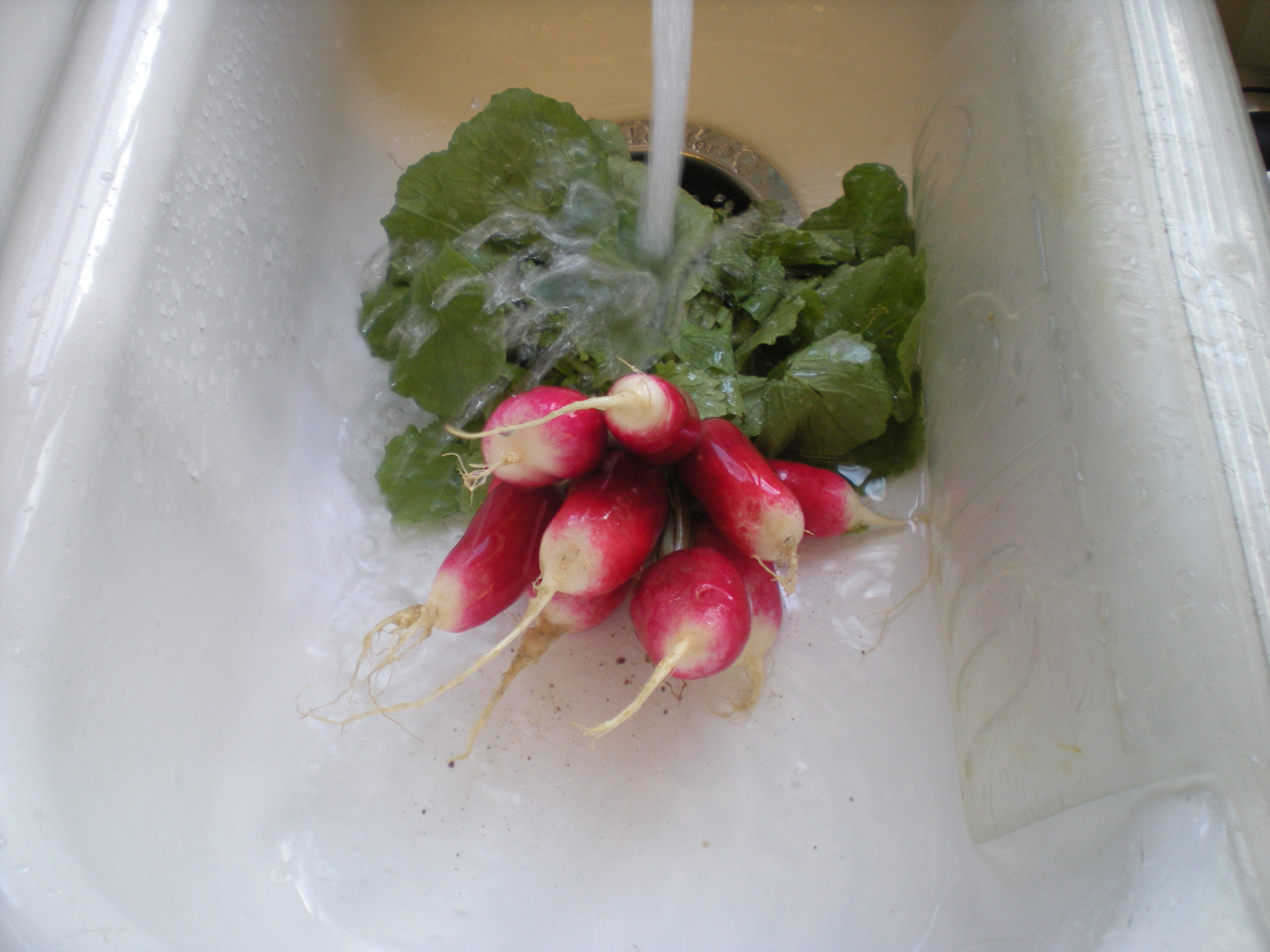
French breakfast radishes. No real comparison, but their radishes were $2.49 a bunch. Say our specialty radishes, like those we find only at Dupont Circle and cost $4 a bunch.

Baby Hakurei turnips. Last time I bought them at Dupont they cost me $4.

Total:

Conservatively — $38. If I got fresh organic lettuce mix instead of Roots in a plastic container, add $5.

The $29.72 a week we pay for this CSA is well worth the price, considering I don’t have to run to organic markets and far away farmer’s markets to get some amazingly fresh veggies. We like the surprises, and the exotic items are interesting to experiment.

It takes about 30-40 minutes to clean and put away the veggies.

I have already been menu planning, and chow mein is a big item. So is a colcannon with turnips, potatoes from Boarman’s, the turnip greens, radish greens and some of the cress and spinach.

A pesto or two is also in the running.

Salads for lunch with some tuna or chicken.

I love opening that box and seeing what goodness is within it.

hocofood@@@

What Does the Term CSA Mean to You?

Posted on

There was an interesting discussion between Kitchen Scribble and Jessie X about whether a CSA should be using sources up and down the coast to supplement their items delivered that aren’t in season locally. Two of the local CSAs offer winter and/or spring shares that include items from outside the Mason Dixon area.

I can see both sides of the discussion. I was originally one who defined CSA as supporting a local farmer.

I found that it isn’t that simple for the farmer. If the source of fruit and vegetables is confined to a very small area with no coordination, there are inherent risks like our hurricanes, tropical storms and flooding, that may impact one farmer. Those risks are shared by the farmers and the CSA members. I now can see that cooperatives of many farmers banding together provide individual farmers less risk, and that risk is also lessened for the CSA members.

Having a network of small farmers also provides variety. Many friends give up on CSAs after a year or two because they are tired of getting corn for eight weeks, or greens for weeks on end. Diversity of the products is what keeps people like me interested in their CSA box every week. Napa cabbage, tatsoi and blue squash, for example, in the fall last year.

This winter we joined the Zahradka Farm CSA, knowing in advance that they partner with farms in MD and PA for meat, and that they got shipments of citrus from Florida. We went on line every week to order. With a half share, we chose six items, from a list of 12-15 items. You could double or triple an item as long as you kept the total to six. We had an option to add eggs. We had an option to add meat. I knew when I made my choices the first week that the cranberry apple chutney included non local fruit, and that the oranges were from Florida. I could have chosen only items from Zahradka if I wanted all the dollars to go to them.

We could buy honey and other items on line to be sent with our order. One week in the “store” they were offering frozen half turkeys left over from the Christmas orders for those who wanted them. We already had one in the freezer from our meat share.

Our summer CSA choice is Sandy Spring. We originally chose them because they delivered to the Conservancy where I volunteer. Having a convenient site for pick up was important to me. The Monday delivery was better for us than a weekend one, when we might have been out of the area for the day, or away for a weekend. This year, they are doing pick up in Columbia, and on Thursdays. A better day for us, but not as convenient a site (it is actually close, but the traffic in Columbia adds time to the journey).

For me, the community part of CSA is having our local community supporting farmers. I am not that concerned about the location of the farms as I am about the viability of organic small farms. I like the fact that Lancaster Farm Fresh Coop, the supplying farmers to Sandy Spring, consists of a group of 60-70 family farmers, most of whom are growing on five or less acres. These family farmers, working together in their community, provide a smorgasbord of heirloom veggies to more than 5000 families within a 150 mile radius of Lancaster County.

These farmers open their farms to the CSA members for potluck picnics. There are two already scheduled for May and June this year. We will be visiting the farms and sharing a meal with some of the members from as far away as Harlem, NY. Last year they chartered a bus to attend one of the picnics. It is fun to see what people make and bring to the picnics.

After last winter, I don’t know whether I will do another winter CSA. I did feel in my CSA box that there were too many root veggies coming in greater quantities than we eat. When many of the choices were sweet potatoes, potatoes, red onions, yellow onions week after week, I knew I had to find a different way. I also ended up drowning in carrots. Even though I like them and use them often, the sheer size and amount in a weekly order was daunting. Like this week. The carrots and potatoes alone were more than enough for the two of us.

I can get meat and eggs, root veggies and pantry items out at Breezy Willow on Saturdays. I go into Breezy Willow knowing they partner with other farmers and offer some citrus from Florida, and veggies from east coast farmers. I am OK with that. they offer a great selection of local meat, they have eggs, and yes, they offer citrus from Florida at the farm store, since they bring it in for the winter/spring CSA.

For those that don’t belong to CSA’s, what are your reasons? For those who do, how do you define CSA? Have you found one that fits your needs and your style of cooking?

hocofood@@@

One of Those Cooking Days & Getting Ready for the HoCo Markets to Open

Posted on

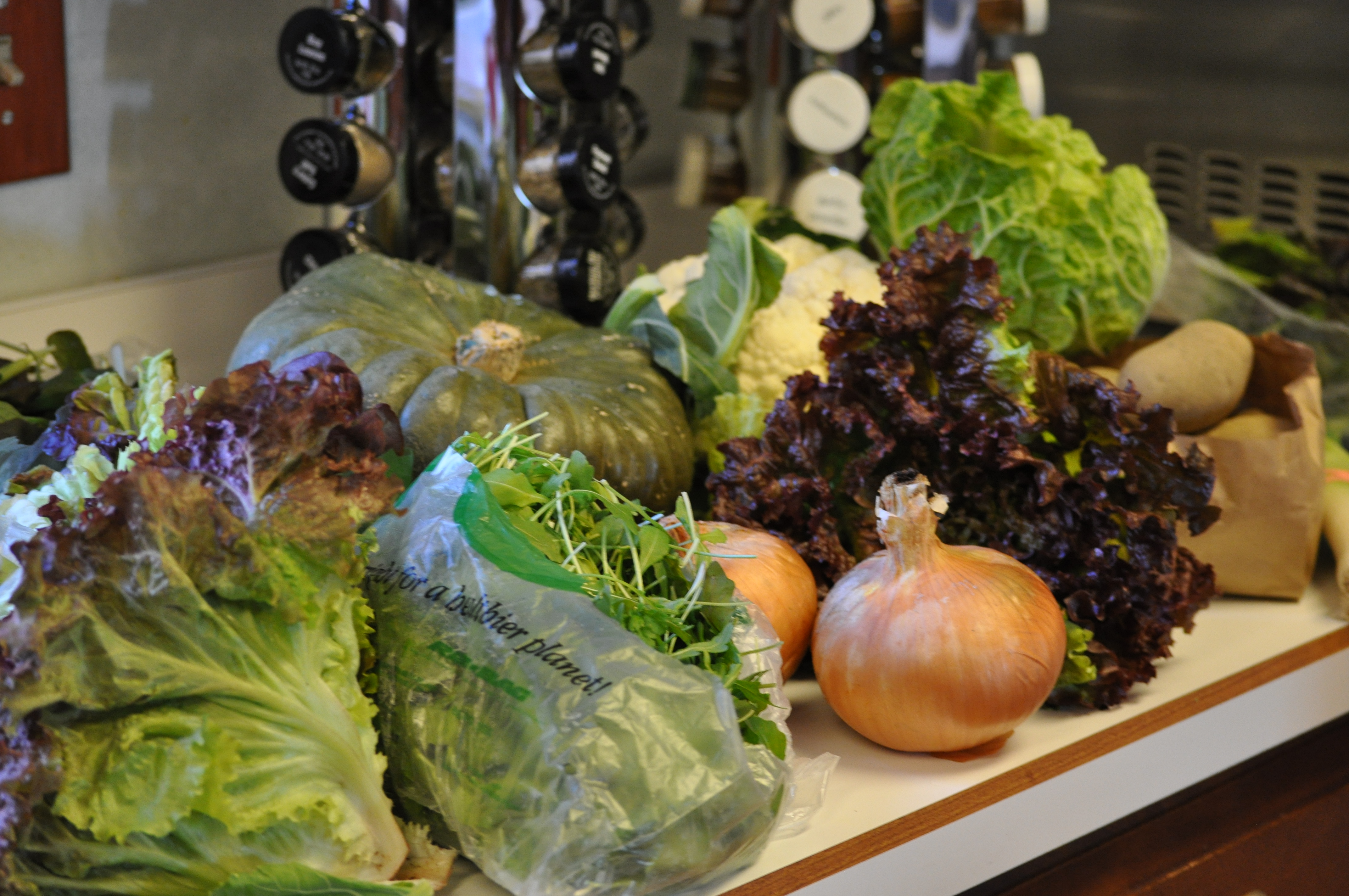
Since I got the CSA delivery yesterday, I realized I needed to do something with all the goodies, from this week and last. The freezer is bare of stocks. I used the last one for soup a week ago using chicken thighs I bought at Roots. I also had eggs galore and beets from this week.

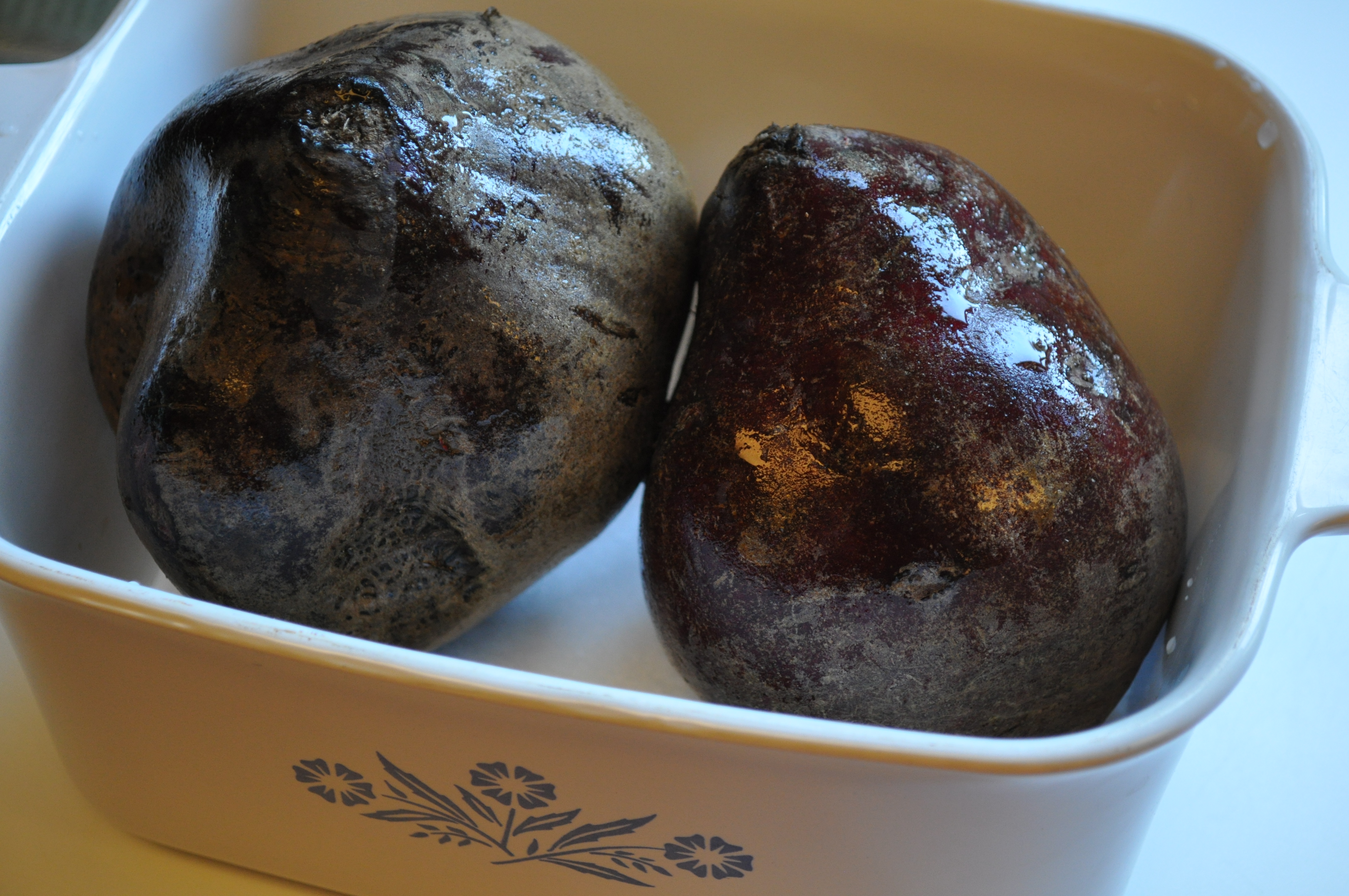
I dry roast my beets. Washed and placed on a bed of salt. Ninety minutes in the oven for beets this size, at 350 degrees.

They will be used for something like this, using the CSA oranges and spring onion.

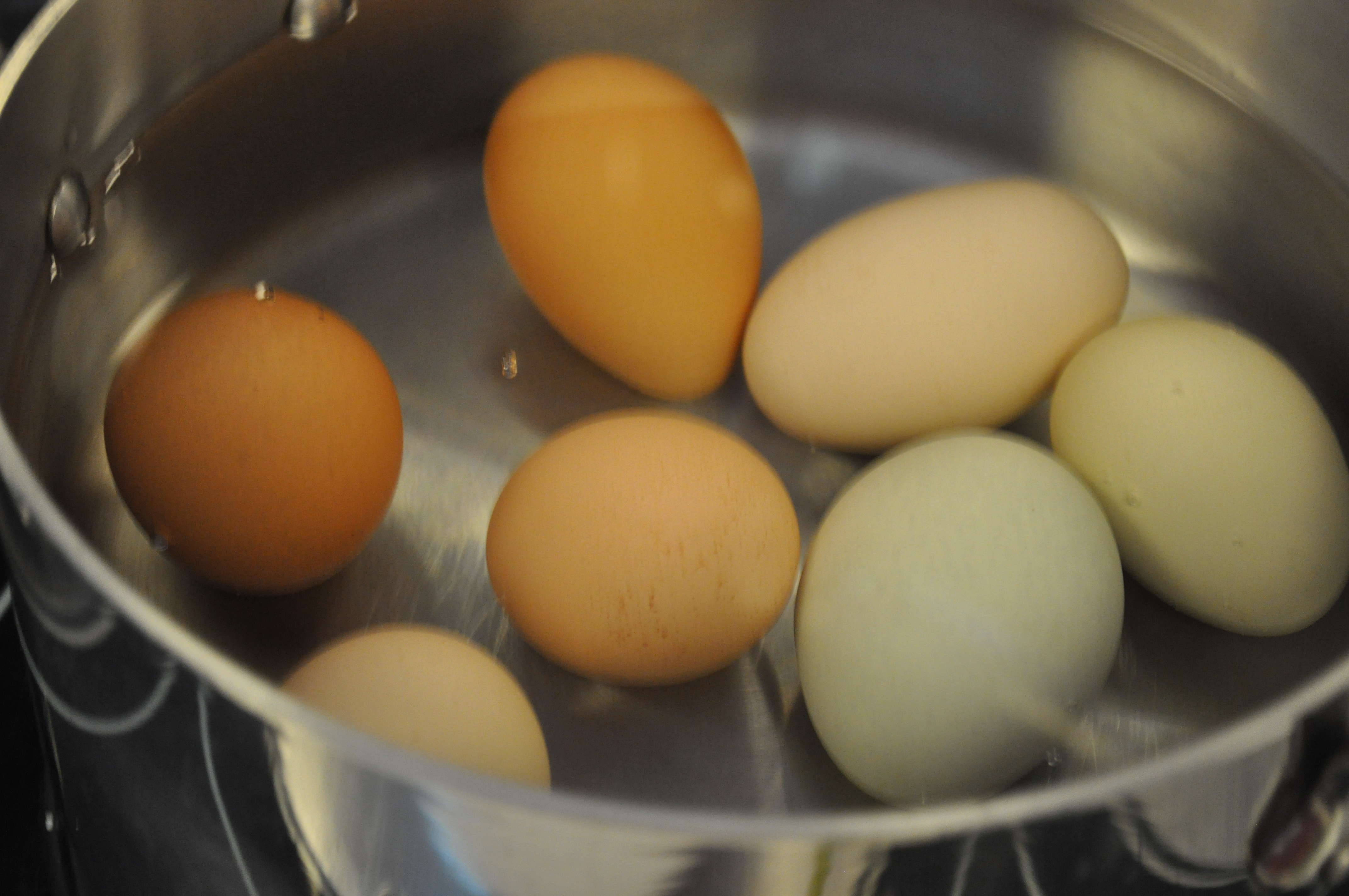
The eggs will go into an egg salad for lunches. Doing these leaves me with 20 eggs until the farmer’s market opens.

As for making beef stock, I chopped up the ugliest carrots, used up the celery and last week’s leeks, and the end of last week’s spring onions to make the base.

Added my herbs and plopped in the frozen beef bones bought at Wagner’s in Mt. Airy a while back. Using these bones frees up quite a bit of space in the freezer. Put water in the crock pot and crank up to high for six hours. Then, I will be working at reducing and straining all the goodness out of this stock.

I will be the first to admit that having a CSA and getting fresh veggies means more work up front. Cleaning greens, prepping veggies, roasting, and cooking takes much longer than opening a box or container and nuking it. We used to do that years ago. I am glad I have the time to do this now. Much of it can be done on weekends, and we eat lots of defrosted soups and stews from crock pot cooking.

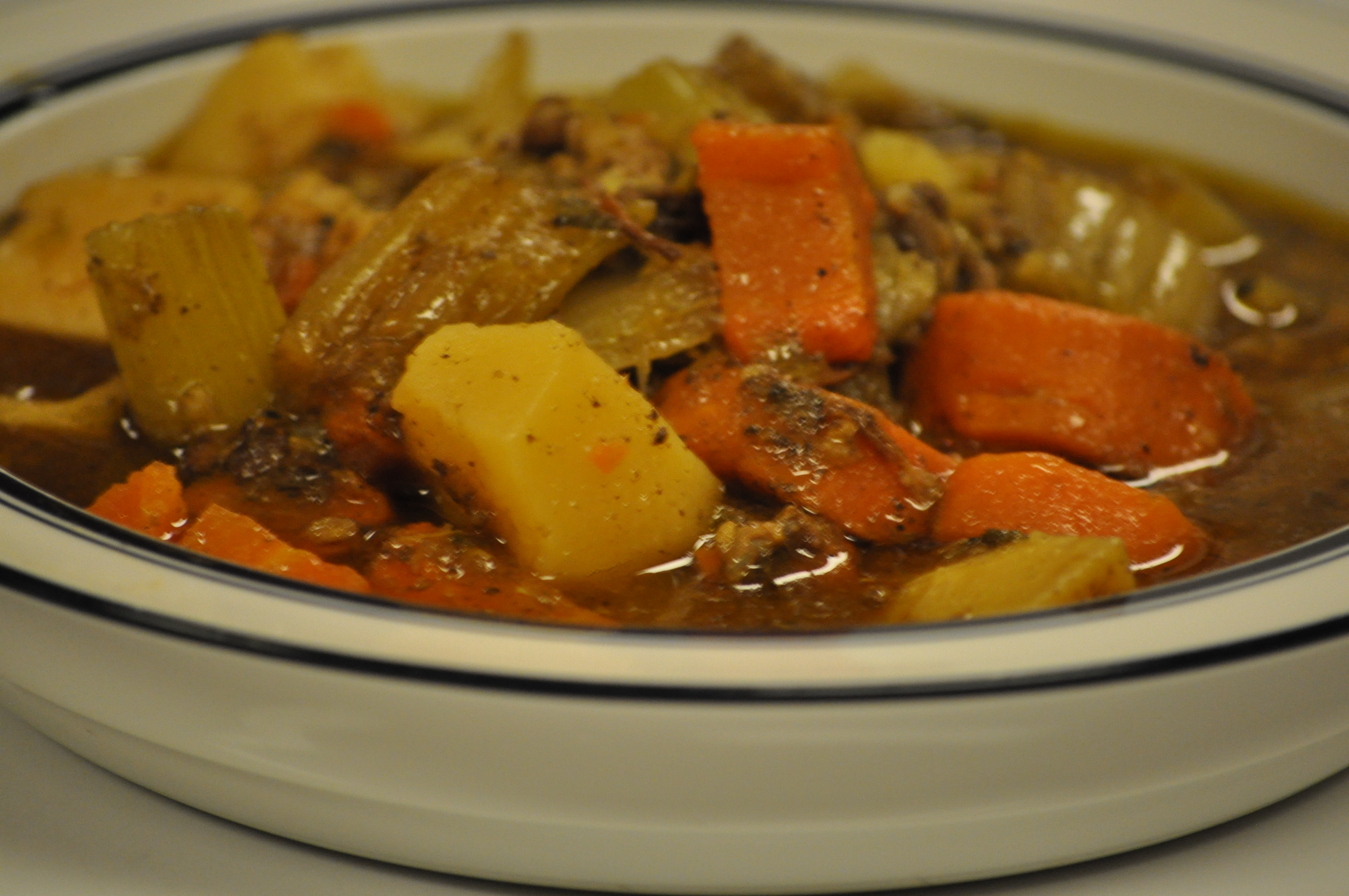
Once all this goodness is done, the dinners and lunches will show up in posts in the next week or so. Maybe another satisfying soup like this one from a few weeks back.

If you want good organic food at a fraction of the cost of pre-packaged, you should consider one of the CSAs that deliver to Howard County. There are a number of them out there, and I find that I spend less for good fresh organic foods by subscribing to a CSA year round. From May 2011 until May 2012, I only have one week without a CSA delivery (and that will be next week).

My summer CSA starts up on May 10th, just in time to use fresh veggies for lunches and dinners. I will be picking up in Columbia this year. Just off Cedar Lane. Thursday delivery so I can still hit the farmer’s markets on Friday and Saturday to get my meats, eggs, dairy and breads. Looks like a summer with minimal grocery store visits because Howard County has a great variety of sources for fresh foods. They are updating the web page daily and adding the vendors. Check it often to see if your market day is covered yet.

hocofood@@@

Winter CSA Week Thirteen, and Dinner from the Box

Posted on

Over nine pounds of veggies. Six items. $18/week which includes home delivery. This week was one of the heaviest hauls of veggies in the CSA for the winter. Zahradka Farm is a vendor at the Glenwood Farmer’s Market so everyone can partake of their fresh veggies for at least six months a year. Joining their CSA allowed us to experience home delivery for the rest of the year.

The six items are a half share. A full share would have been ten. We choose from an on line ordering form. Over the weekend they put up a list with what is ready to pick. This is what I ordered and received, with weight in ounces after item received:

collard greens (12 oz)
carrots (34 oz)
onions (24 oz)
beets (26 oz)
radishes (14 oz)
new potatoes (40 oz)

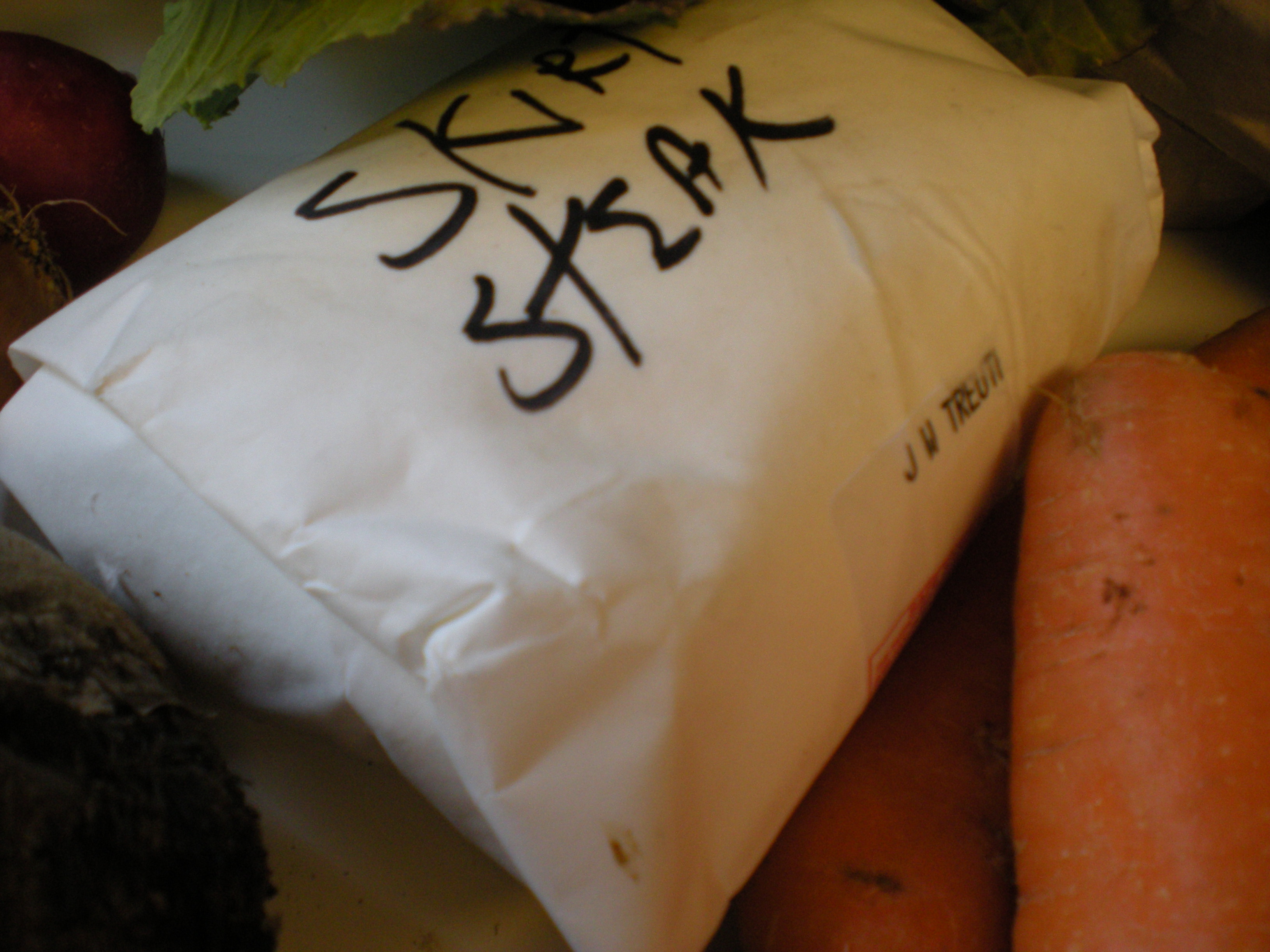
We also received skirt steak from JW Treuth butchers, as our weekly meat selection, and this is the week for my biweekly dozen eggs, all colors and sizes.

Some of the eggs are a deep brown, although the pictures don’t do them justice.

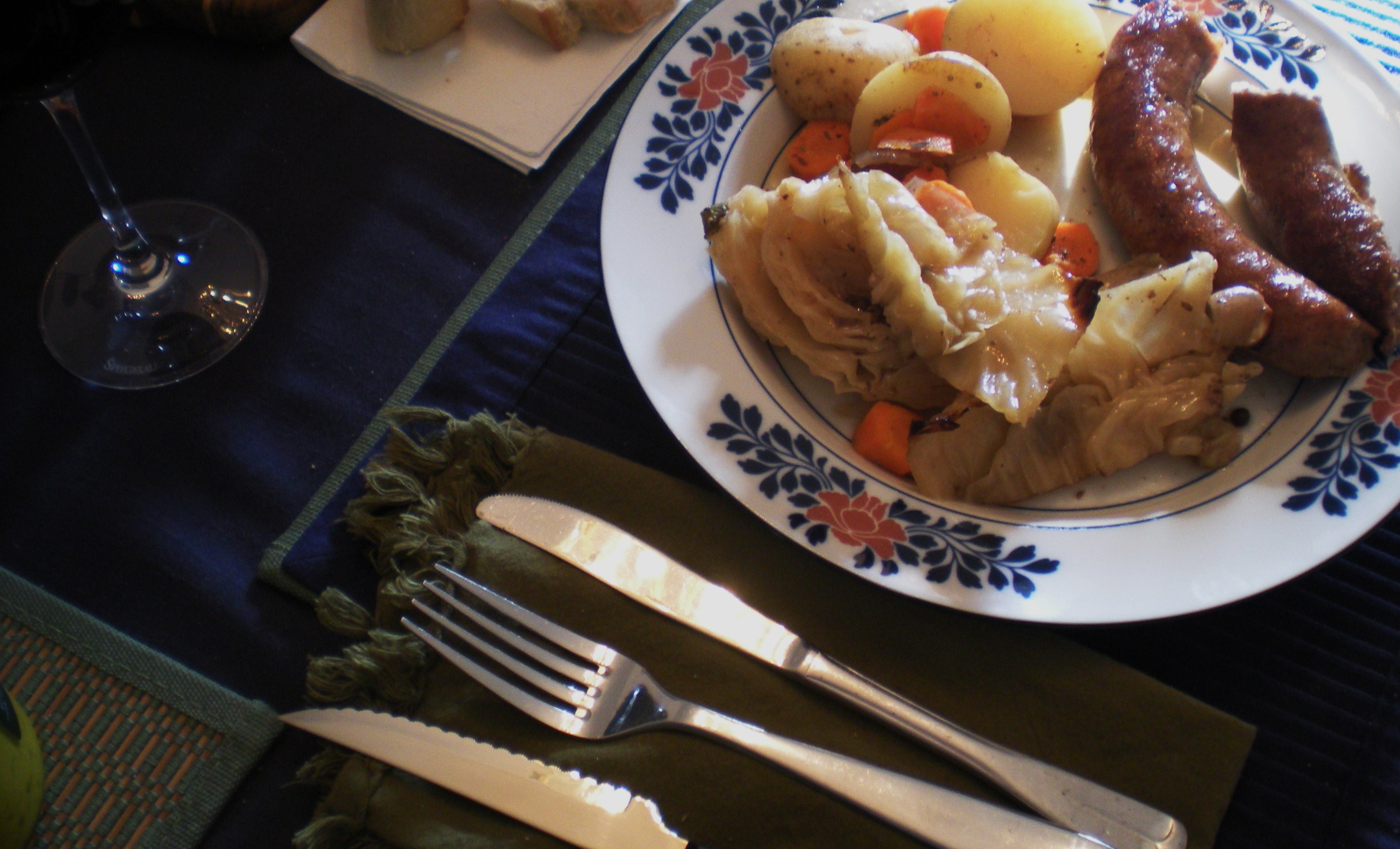
I already put one of the carrots in the leftover cabbage from St. Paddy’s Day, with last week’s white potatoes. Topped it with a fresh kielbasa from TLV Tree Farm. They are just down the road from us. We go out to the farm on Saturdays when they are open from 10-2. Last week we picked up this fresh kielbasa. Just like the kielbasa made in my husband’s home town in PA.

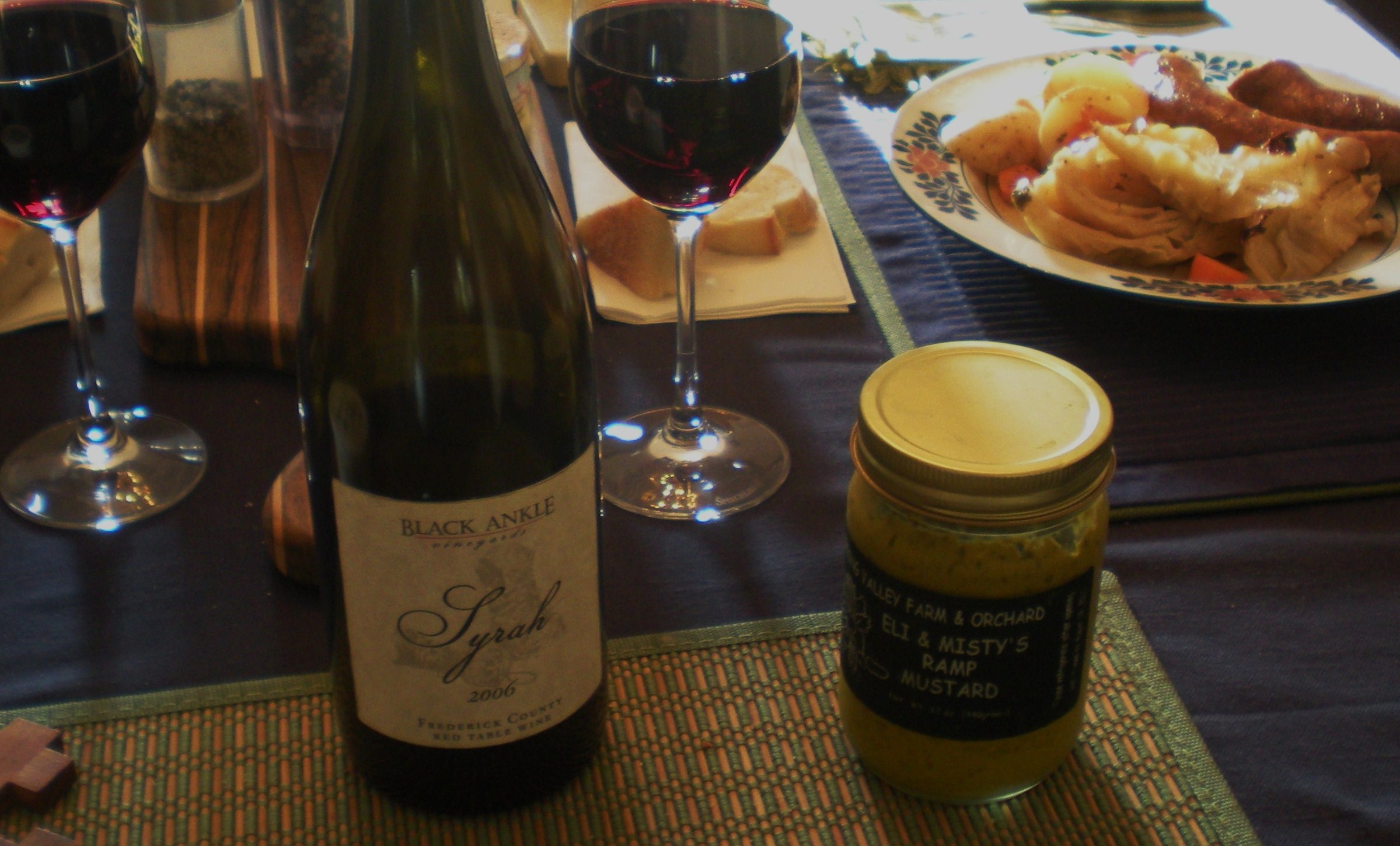
I opened a bottle of wine from one of the closest wineries to Howard County, Black Ankle. Interesting that this 2006 Syrah had a musty nose, which disappeared after a while, but I wonder how the other couple of bottles in the cellar are doing. Tasted great, though. I wanted a bigger but not huge wine to stand up to the kielbo and the mustard.

This dinner came from less than 25 miles away, if you discount the ramp mustard, which is from Spring Valley Farm and Orchard, in Augusta WV. I did buy it at Dupont Circle Market, which is 25 miles south of us.

A really tasty dinner, right from our proverbial back yard.

hocofood@@@

Getting Organic in a CSA

Posted on

Is it cheaper than shopping organic stores? What does it buy me? And, why do I care about organic? For me, step by step, I am replacing processed and treated foods to limit my allergic reactions to the preservatives. The summer and fall Sandy Spring CSA was a large contributor to that switch. For 33 weeks, between the summer and fall CSAs, I ate almost 100% organic vegetables and IPM or organic fruit. Sandy Spring, the largest CSA delivering to Howard County at the Conservancy and in West Columbia off Cedar Lane on Thursdays, is my source for organic veggies.

Continuing into a winter CSA helped, but the winter Zahradka Farm CSA is not certified organic. They are the only year round CSA in the area. They sell at Glenwood Market. A quote from their web site.

“Our farming practices are modeled after the Certified Organic guidelines for Md. as often as possible. If we are having problems with our crop we resort to IPM (Integrated Pest Management), and we are always open about what is going on with our farm to our customers.”

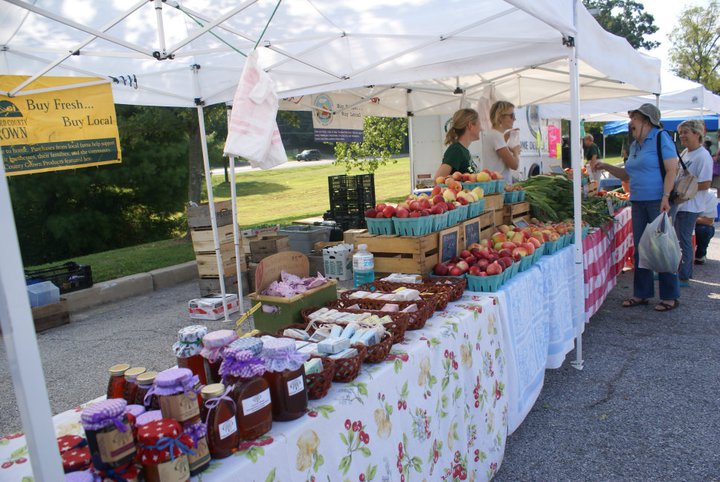
I also buy at our farmer’s markets in the county. Breezy Willow Farm is certified organic. It is the only one at the farmer’s market that is certified so far. They also offer a CSA for those who want a regular organic source of veggies, bread and eggs. I buy what I need from them weekly to supplement my CSA delivery, particularly their homemade breads and their eggs. If my Thursday delivery doesn’t include something I need, I turn to Breezy Willow as my first source. The picture below taken of Breezy Willow with South Mountain Creamery in the background from Glenwood, is courtesy of the Howard County Farmer’s Market Facebook page.

I created a tag, value of CSA, that will track what I get weekly in my organic CSA, and compare it to the cost of buying organic veggies at the local supermarket and/or coop. Since much of what I get is pretty mundane, places like Harris Teeter will include many of the veggies in my box, but Roots, David’s or The Common Market will be more likely sources for tatsoi, mizuna, sunchokes, garlic scapes, and the other more exotic veggies. I may use Breezy Willow’s pricing as well, since I go to the Glenwood market most weeks.

Last year’s summary tables tell me I got 124 different items over the course of the 25 weeks. That could be difficult to track, but I am trying. Here is a list of a typical delivery from our summer CSA last year, from September.

1 Head Green Leaf Lettuce – Certified Organic – Green Valley Organics
2 Large Eggplant – Certified Organic – Farmdale Organics or Windy Hollow Organics
1 Bunch Green Mustard – Certified Organic – Maple Lawn Organics
1 Bag Baby Mixed Sweet Peppers – Certified Organic – Organic Willow Acres
1 Bunch Cherry Belle Radishes – Certified Organic – Pine Hill Organics
2 Small Heads Red Butterhead Lettuce – Certified Organic – Riverview Organics
1 Bag Sweet Candy Onions – Certified Organic – Crystal Springs Organics
2 Delicata Squash – Certified Organic – Green Valley Organics
1 Bunch Tatsoi – Certified Organic – Hillside Organics
1 Bag Sweet Potatoes – Certified Organic – Pine Hill Organics
1 Bunch Curly Parsley – Certified Organic – Noble Herbs
1 Butternut Squash – Certified Organic – Soaring Eagle Acres
1 Package Portobello Mushroom Caps – Certified Organic – Mother Earth Organic Mushrooms

This CSA cost us $30/week, and every week there were 10-14 items in the box. The week above yielded 13 items. Therefore, doing the math, buying 13 organic items that averaged $2.33 each would show you the value of this particular season in the CSA. Some years may not be as productive, depending on the weather. 2011 was a very good year for Lancaster Farm Fresh Coop, the parent non-profit supplying Sandy Spring CSA.
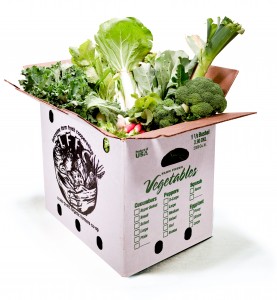
A pic from an August delivery:

The list:

Monday, August 8 – Full Share

12 Ears Sweet Corn – Certified Organic – Organic Willow acres or Sunrise Ridge Organics or Soaring Eagle Acres or White Swan Acres
*Corn is one of the most difficult crops to grow organically. If you should find a worm in any of the ears – don’ panic! Simply cut those areas off and enjoy the rest.

2 Yellow Straightneck Squash – Certified Organic – Echo Valley Organics
1 Bag Yukon Gold Potatoes – Certified Organic – Echo Valley Organics
2 Pints Mixed Cherry Tomatoes – Certified Organic – Farmdale Organics
1 Italian Eggplant – Certified Organic – Farmdale Organics
1 Bag Red Tomatoes – Certified Organic – Plum Hill Farm
1 Bag Jalapeno Peppers – Certified Organic – Millwood Springs Organics
2 Heads Small Red Butterhead Lettuce – Certified Organic – Riverview Organics
1 Cantaloupe – Certified Organic – White Swan Acres
1 Bunch Curly Parsley – Certified Organic – Noble Herbs
3 Green Bell Peppers – Certified Organic – Maple Arch Farm
1 Bag Red Onions – Certified Organic – Deer Hollow Farm

Twelve items this week. $2.50 per item average. Again, all organic including the cantaloupe. Two pints of heirloom cherry tomatoes counts as one item. Where could you find a pint of heirlooms for $1.25? A dozen ears of organic sweet corn. At least $4 a dozen, I recall from seeing it at Roots last year, and thinking what a bargain we were getting.

As for the volume of produce here, thankfully every week included an herb, which lasted in the veggie drawer for many weeks, allowing me to use fresh herbs for most of my cooking. We did end up freezing tomatoes and canning pickles from cucumbers.

I even canned “dilly beans”. For a vegetarian or a less meatarian, having fresh produce of this quality will easily feed a couple for most meals a week. We used all the greens and lettuces in salads for lunches. The hardest thing to use up, for us, were the eggplants and squashes. Lots of ratatouille, eggplant parm, lasagna, and I started making chocolate zucchini bread to take to the conservancy.

Follow along this spring, summer and fall as I talk about what I get, what I do with it, and what it would cost to do it differently.

hocofood@@@